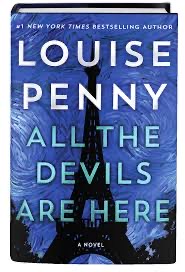
THE BOOK: Chief Inspector Gamache’s family has gathered in Paris in anticipation of the birth of their daughter Annie’s second child. Instead of a peaceful family reunion, tragedy prevailed on the first night of their visit when Armand’s godfather, Stephen Horowitz, was struck by a hit and run vehicle, sending him into a drug-induced coma, and Armand into a murder investigation. One of the roadblocks he and his son-in-law, Jean Guy Beauvois, come up against is the French police’s disdain for their Canadian colleagues, dismissing them as backwater rubes.
THE BEAUTY: The locale sent Armand down memory lane as he reminisced about the trip thirty-five years prior when he brought Reine-Marie to Paris to propose marriage. He remembered the moment along the Seine at dusk, when he turned her around to catch her first glimpse of the Eiffel Tour all aglitter for its nightly light show. A beautiful and romantc memory.
THE FOOD: The hostess gift from Madame Dussault, the wife of Armand’s good friend, Claude, who happened to be the Prefect of Police, was a box bearing the logo of Patiserrie Pierre Herme. “Is it…?” queried Reine-Marie, and indeed it was! An Ispahan confection from Patisserie Pierre Herme. My version is more modest, but good. The word “ispahan” comes from a variety Damask rose, Rosa ‘Ispahan’, a type of garden rose introduced from the Middle East to Europe during the crusading 13th century. Apparently, Herme became obsessed with it, creating a recipe book full of ispahan delectables.
RASPBERRY ALMOND CAKE ISPAHAN
For the cake batter:
160 g unsalted butter, softened
110 g powdered sugar
170 g almond flour
3 large egg yolks
1 whole large egg
80 g all-purpose flour
3 large egg whites
2 ½ T granulated sugar
5 tsp whole milk
1 T rosewater or rosewater syrup
For the white chocolate and dried raspberry glaze
7 oz white chocolate
1 ½ tablespoons grapeseed oil
1 oz chopped freeze-dried raspberries
Preheat oven to 355º F. Sift almond flour and powdered sugar into a medium bowl and set aside. Sift all-purpose flour into another bowl and put aside as well.
To make the cake batter, beat softened butter and almond flour/sugar mixture 3 minutes, using an electric mixer Add a whole egg with egg yolks and whisk 2 minutes. Then add milk mixed with rosewater and beat 1 minute again. In a separate bowl, beat egg whites (not too firm), gradually adding granulated sugar. Delicately add egg whites to the cake batter, incorporating flour at the same time. Mix with a starting from the center, from bottom to top. Don’t overfold! It is better to underfold than overfold.
Butter a nonstick loaf pan and dust with flour. Garnish the cake pan with ⅓ of the almond-rose batter and smooth out. Arrange fresh raspberries away from edges. Then cover raspberries with another ⅓ of batter. Add berries again at a distance from the edges. Pour ⅓ of the remaining batter over fresh raspberries.
Lower the oven temperature to 300 ºF and bake for 1 hour 30 minutes or until a knife can be inserted and removed cleanly without streaks of batter. Unmold the cake immediately after baking and allow to cool to room temperature.
To make the white chocolate and dried raspberry glaze, melt white chocoloate in a microwave in 3 (30-second) intervals, stirring between each melt. Add grapeseed oil, chopped freeze-dried raspberries and gently mix. Let the glaze cool down to 86º F maximum, otherwise, it will be too runny to stick to the surface of the cake.
To decorate the cake, transfer the loaf to a wire rack placed on top of a tray. Pour the glaze over the cake.
Make sure that all ingredients are at room temperature. Take the butter out of the fridge two hours before you start baking.
Slightly beat egg whites (not too firm).
Use only fresh raspberries since the frozen ones are too watery to make the cake.





 What is genius? High IQ, creative thinking outside “the box,” productivity? How do you know a genius when you meet one? These are the things I thought about as I was introduced to the Current War of the late 1800’s, and the men who fought in it: Thomas Edison, George Westinghouse, Nikola Tesla, JP Morgan, and the protagonist of this story, Paul Cravath. The war was about electric current: alternating and direct. On the direct current side was Thomas Edison, who had already established supremacy by building direct current generators in Boston, Philadelphia, and New York. Edison had a powerful network of supporters, including the ruthless banker and financier, JP Morgan. On the opposing side, George Westinghouse, his lawyer, Paul Cravath, and Nikola Tesla fought for alternating current, which they believed to be the superior form of eletricity to power cities and towns, if they could just solve the high voltage problem that made A/C current potentially dangerous. Among the impulses that drove these men were greed, legacy, the desire to create a superior product, inventing ways to solve technological problems, and love. Their story was a gripping tale, beautifully crafted, with just enough science to help someone with a deficit in that area, care about how an electric motor works.
 Mabel and Jack moved to Alaska to escape from their sorrows in Pennsylvania, perhaps underestimating the potential toll that living in the wilderness might take on their bodies and spirits. Jack worked long hours clearing land for a cabin and a field to grow crops. Mabel took care of the domestic side of life and baked pies for the restaurant in their little “town,” to make some extra money, but she felt more distant than ever from Jack because of his long hours and the effect of the punishing labor on his aging body. One night, during the first snowstorm, the two went out to celebrate the event, by building a snow girl, replete with mittens and scarf. Days later, they noticed a little girl in the woods, alone and shy, wearing their mittens and scarf. Gradually they were able to draw her closer to their house, until finally they spoke to her. She was a wild little thing, accompanied only by her friend, the fox, surviving in the wilderness.
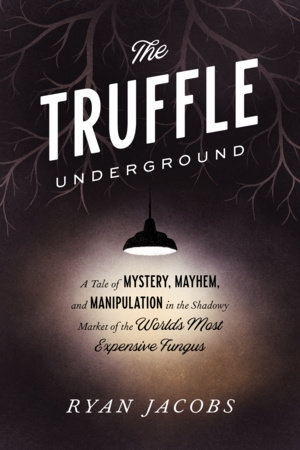 I was interested in truffles because of their mystery and inaccessibility. Many years ago I had lunch at Cafe Boulud in Manhattan during restaurant week. Thinking that my three-course meal was going to be thirty dollars, I ordered the white truffle risotto. When it was served, the waiter kept shaving the fungus on my plate until my eyes grew wide at the extravagance. To say that I thoroughly enjoyed that lunch is an understatement. I was like the cat that swallowed the canary, having a great time until the bill was delivered, and my risotto had cost $103.00! Apparently, I should have read the menu more carefully. When I read in the book about suppliers mixing inferior Chinese truffles with bags of the highly prized French Tuber melanosporum, I wondered if what I was served was the real deal, or a Chinese fraud. Daniel Boulud is quoted in the book. “Right after Christmas I started getting some truffles that I thought were overripe at first… “they were very hard and had very little veining. They smelled of benzene and tasted like cardboard. Then I began hearing about the Chinese truffles.” It’s amazing how quickly shady characters infiltrate an up and coming market, finding a way to cheaply produce something that can be passed off, at least for a time, as a real luxury product. One of the fascinating things I learned was that at an auction in 2010, Macau casino tycoon Stanley Ho bid $330,000 for 2 pieces of white truffle, the rarer, smoother-surfaced species with pale yellow-brown skin that can only be found in a few places on earth and cannot be cultivated. The average life cycle of a truffle-producing tree is 30 years, and green oaks are better at producing truffles than white oaks. Saboteurs who try to keep night truffle hunters away from their property will slash tires, smash windshields, blow up cars, and kill truffle dogs. That was the section of the book I couldn’t read, not being able to imagine or stomach a human who would kill a dog. As a result of the fraud and corruption in the industry, neither desert nor Chinese truffles can be legally sold for consumption in Italy.
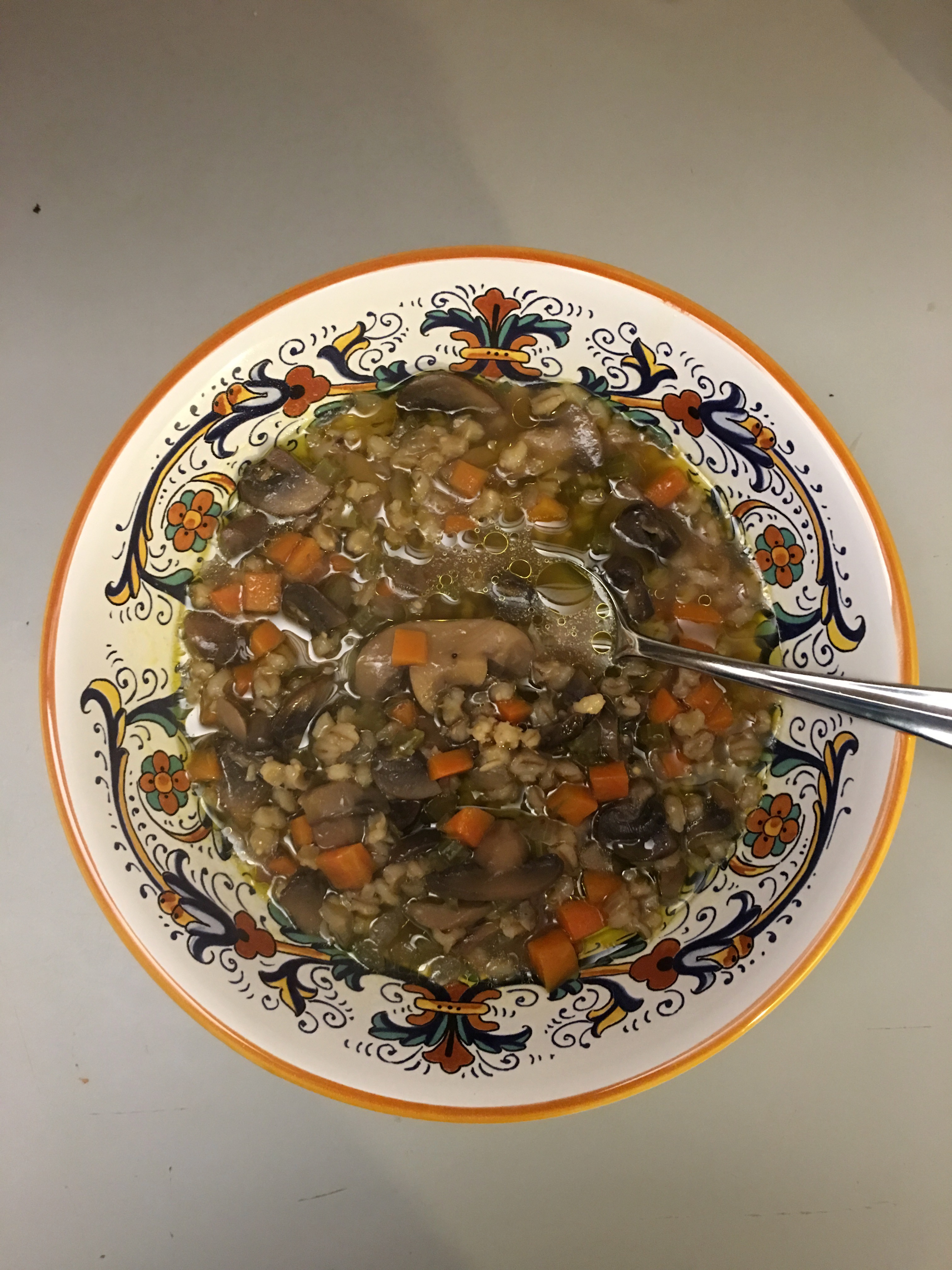
 This was the winner of the International Booker Prize for 2019. Books that are translated into English from any language are eligible. What makes this unique is that Jokha Alharthi is the first Omani, to win. I can say that the structure of this book presented some problems for me. Each chapter was told from a different character’s perspective, and although there was a family tree at the beginning of the book that helped me keep the characters straight, I still had to stop and page back through the chapter to connect who I was reading about with what had come before. None of this is a criticism of either the writing or the translation, simply my inability to quickly navigate through unfamiliar culture, and unfamiliar names and pronunciations. And yet, those are all of the things I love about reading books from other countries! This story takes place during a time of great change in Oman. Women were gaining independence and technology was changing the fabric of Omani life. There was also more western awareness, culturally. With this backdrop, three sisters, Mayya, Asma and Khawla, come of age, marry, and raise families, each one finding and expressing love on their own terms with varying degrees of success. While it was a tough read for me, it was well worth it.
 Picture from
 bbfbooksbeautyfood