THE BOOK:
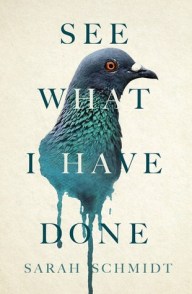
 I was loving this book and saved the last 50 or so pages so that I could approach the ending with a fresh view and savor it when I had an uninterrupted hour to finish it. Now, two days later, I’m still trying to figure out the ending. (BTW- I had figured out the third thing about Elsie by page 40, so that wasn’t what I didn’t get.) I’ve been skimming the book looking for clues to explain the things I didn’t feel were revealed by the ending. If the third thing about Elsie was the big reveal, then I get it, done! But Florence says, “I never did tell anyone my secret. It’s strange, because I told them everything else. I just couldn’t tell this. In those days, you couldn’t say a word, and then it became too late. Elsie had found her Albert, and I had to use up the remnants of other people’s lives to decorate my own. I didn’t mind so much, as long as we could be friends. As long as she didn’t leave me. It’s strange, isn’t it? How love paper-aeroplanes where it pleases. I have found that it settles in the most unlikely of places, and once it has, you are left with the burden of where it has landed for the rest of your life.” I think I understand now. But to share it, would be to spoil it for you. How I wish I could talk to you after you read it. To see if we agree, and to ask you, “Who bought the brooch?”
Florence is 84 and living in an assisted living facility, flirting with dementia. She is a lovable, if somewhat socially awkward character whose best friend, Elsie, of course, grounds her and keeps her in touch with her former self by reminding her of the many kindnesses Florence acted upon in her youth. As Elsie tells it, Florence couldn’t help herself, always driven to help out, to steer people toward happy endings. At one point in the story, Florence finds herself crying, something she hadn’t done in years, because of a small act of kindness by one of the staff. “It’s strange, because you can put up with all manner of nonsense in your life, all sorts of sadness, and you manage to keep everything on board and march through it, then someone is kind to you and it’s the kindness that makes you cry. It’s the tiny act of goodness that opens a door somewhere, and lets all the misery escape.”
My story. Not long ago, I was in the Bob’s Red Mill section of the supermarket (for those of you who’ve been there, you can understand how difficult it is to find things), scanning the shelves methodically back and forth, looking for potato starch flour to make vanilla wafers. A woman stopped and asked what I was looking for. When I told her, she asked if I would like some help, an extra pair of eyes. I said yes, and we looked together for a few minutes until we were joined by an employee who asked if she could help us find something. When I told her what we were looking for, she said, “I know we sell it, unless we’re out of it.” Seconds later, my new friend found it! I thanked her and we went our separate ways. As I made my way down the aisle, I began to tear up, not knowing until that very moment that I had really needed a random act of kindness that day. I later wrote in my journal, “Such a simple gesture meant so much to me. Thank you, lady, I wish you all good things.”
THE BEAUTY:
I read the Acknowledgments at the end before I started the book, and was so glad I did, because it allowed me to focus my attention on a place that the author loves while I was reading. Joanna Cannon spent childhood holidays with her parents climbing the abbey steps, wandering around Woolworth’s, going on ghost walks in Whitby, and she acknowledges that her book is a love letter to it.

The whale bones with the abbey in the distance, and the North Sea beyond. Florence remembered driving into Whitby as a child, getting the first glimpse of a sliver of the North Sea beyond the Abbey. Photo by whitehorseandgriffin.com 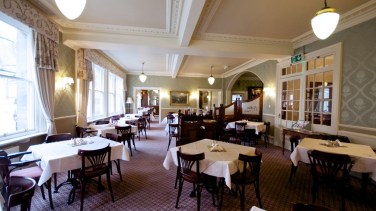
Botham’s Tea Rooms on Skinner Street. Picture from their website.

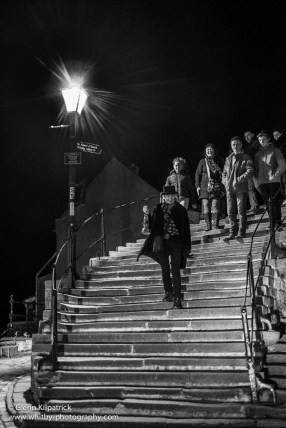
photo from whitbystoryteller.UK
THE FOOD:

Florence has a thing for Battenberg cake, named for the town in Germany where Princess Victoria, a granddaughter of Queen Victoria, married Prince Louis of Battenberg. Does this photo remind you of anything related to the book?
THE FOOD:
BATTENBERG CAKE
6 oz butter (10 T)
6 oz sugar or ⅞ C (measure out a cup and remove ¼ C)
6 oz flour
1½ tsp baking powder
½ tsp salt
3 medium eggs
1 tsp vanilla extract
red food coloring
to decorate
4-5 tablespoons apricot jam
2 packages marzipan dough (Whole Foods)
icing sugar for dusting
Pre-heat the oven to 350º .
Make an aluminum foil strip to fit the pan, to keep the plain dough from mixing with the pink dough. Grease the whole pan, sides and bottom, insert a piece of parchment paper to fit the bottom, and grease that. The foil probably won’t stand up until you put one of the batters in.
 I wish I had taken a picture of the pink and plain batters in the pan before putting it in the oven, because it was cool looking, but I was pretty covered with batter at that point, as was every counter space in the kitchen. I’m a very messy baker, but a pretty neat cook.
Put the butter and sugar in a bowl and cream it until light. Add the eggs one at a time and beat well after each addition. Add the vanilla extract and flour and mix until smooth. Divide the mixture into two and add the red or pink food colouring into one half and mix well. (I weighed the whole batter, then took out half by weight to divide the batter into equal halves. Spoon the mixtures into the prepared tin.
Bake in the oven for 30-35 minutes, test with a toothpick to see if it is ready. Allow the cakes to cool in the tin for about 5 minutes. If the tops are not even, cut the domes off to level the cakes before turning them onto a cooling rack and peeling off the baking paper to cool completely.
Roll out the marzipan onto baking paper sprinkled with icing sugar into a rectangle approximately 8” x 12”. This was work. I don’t know how old the dough was, but it was a little hard to knead, and I didn’t want to knead too much, not knowing if that was going to affect the texture when I rolled it out.
Warm the apricot jam and then spread on one of the long sides of the plain cake and join it to the pink cake and place it on top of the marzipan. Spread more jam on top of the cakes and put the pink cake on top of the plain one and the plain one on top of the pink one.
Now brush the jam all over the cake including the sides and top. Roll up the cake in the marzipan and trim off any excess.
Mine was not nearly as pretty as the photos you’ll see online, but it still was pretty impressive, don’t you think?
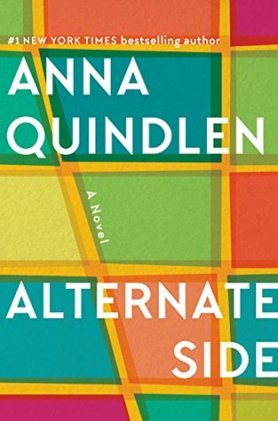 On the very first page, Manhattan makes an appearance as Nora recalls the crowded Village bar where she met her husband, Charlie, twenty-five years before. From then on, New York City is a powerful presence on nearly every page. Nora had one ambition after college, and that was to live in New York. Her husband, Charlie, however, was more of a country mouse, providing there was a golf course. So Nora was living her dream in a Queen Anne style townhouse on the upper east side on one of the very few dead end streets in New York. A little bit of research led me to an article in Curbed New York called “20 of NYC’s Shortest Streets, Mapped,” where I found #16, Henderson Place between east 86th and 87th. “Henderson Place is a charming cul-de-sac that many New Yorkers have probably never heard of.” Only it wasn’t the actual dream she’d had in college, when spending a weekend at her friend’s parents 5th Ave. apartment. “… and she recalled how, entering Missy’s parents’ duplex from an elevator that opened directly into it, she had seen the living room with its pale yellow sofas and apple-green drapes, Central Park a decorative accent through the enormous windows, and thought, This is what it is like to live in New York.” I, too, have a fantasy of having a penthouse in New York, and I, too, will never realize it. But, I did have the same experience as Nora, years ago, in New York with friends, when my husband and I were included in a dinner invitation to their cousin’s penthouse on 5th Ave. The elevator opened right into their foyer, with the living room and grand view of Central Park behind. We were treated to delicious Chinese take-out and bottles of Veuve Clicquot. He was such a gracious and interesting host! The restaurant was called Our Place China Chalet on E. 79th St. We liked the food so much, we kept going there on subsequent NY trips. Jim remembers having Szechuan eggplant for the first time at the penthouse. He loved it, researched a recipe, and it’s now a staple in our house in the summer when the Japanese eggplant are harvested from the garden.
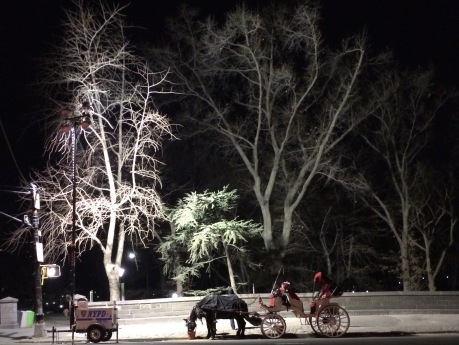 New York, of course. You either love it or hate it. What is there to love? The energy, the movement, the pace, the bustle – all of that hits you in the face the moment you step out into the street. Learning to walk the sidewalks and not look like a tourist takes some observation and concentration, but when mastered, you feel like you belong. I love the corner bodegas where flowers are sold all year, and we always buy a bunch for the room. The ubiquitous Duane Reade, where in the one on 8th Ave. we saw the unofficial mayor of New York, Fran Lebowitz, on the arm of a very handsome, very tall young man. And of course, the obvious reason to love New York is Broadway! There is no other theater (well, London’s west end is pretty good) but Broadway. And that leads me to the image above, taken on our return walk to the hotel after seeing Side Show at the St. James Theater on New Year’s day a couple of years ago. Aaah, Central Park at night.
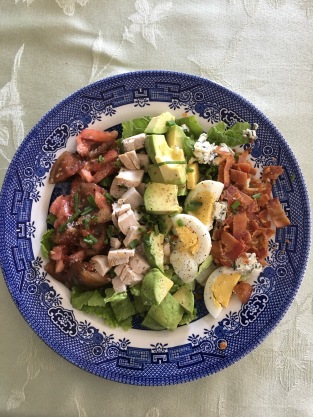 At a work luncheon where unknown to Nora, her career path was about to change, Cobb salad was served. “When did Cobb salad become the official lunch food of New York City women?” When, indeed?
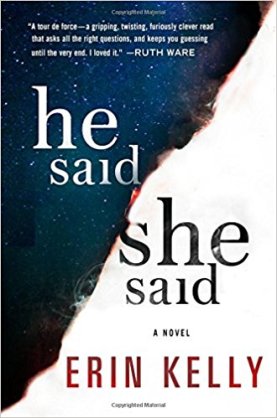 No matter how painful it is, if a relationship is going to survive the long haul, truth must be told from the start. This is the story of lies concealed over time, lies that festered and grew, until protecting them became the raison d’ etre.
 An onlooker watches an annular solar eclipse from New Mexico. Photograph by Colleen Pinski, National Geographic Your Shot.
 The way this book is constructed is a marvel. It rambles like stream of consciousness writing, then catches itself, while the narrator, in whose head we reside for the duration of the book, reminds us that she has digressed, and brings it all around to where she originally left off, having shared some facet of her personality that illuminated who she is. Although it doesn’t sound like it, the book follows a linear track as the narrative goes back and forth in time, with her memories, to flesh out the details of her life, helping the reader understand, and ultimately empathize with her.
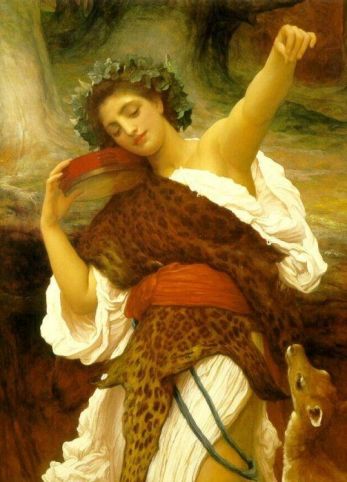 In addition to being a self-taught “learned person,” Aaliyah was also a student of classical music, and mentions many of her favorite pieces as she makes her way through the local record store, 2 records per month – all that her limited budget will allow despite her obsession. So I thought about using either Lizt’s Etudes or Chopin’s Ballade #1 in G minor, but I kept thinking about a scene she described from the Israeli siege of Beirut in 1982. Three Israelis in combat fatigues broke into her apartment in the pre-dawn hours. She grabbed the AK-47 that was on the bed beside her (don’t ask, read the book, it’s a good story) and without having to fire a single shot, sent those 3 intruders scrambling out of her apartment and into the street. Needless to say, her reputation in the neighborhood as a “crazy lady” went a long way in the future toward keeping her safe. But the image of crazy ladies reminded her of the Maenads, the female followers of Dionysus (Bacchus is Roman mythology) whose name translates as “raving ones.” They reached a frenzied state with the help of dancing and intoxication. When I searched the web for images of Maenads, this picture by Frederick Leighton, called “Bacchante,” came up. Unfortunately, the caption said that it was in a private colection, making the original inaccessible to me, although there was a link to purchase a print. I just love this picture. Not sure why. Wildness? A girl and her greyhound – goat – sheep? I don’t know. I just can’t stop looking at it.
 My husband likes dried cherries, so I added them, warmed the pudding and drizzled it with honey.
 I heard an interview on a podcast, probably Just the Right Book, with the author, Amy Bloom. She said she relied heavily on Eleanor Roosevelt’s correspondence in crafting her fictional account of Eleanor’s relationship with Lorena Hickok. Perhaps that is why the dialogue rings true, Eleanor’s remarks more than Lorena’s. Eleanor was a much more accessible character than Lorena in this book. She comes across as vaguely saintly without ever a hint of “poor me,” although if what I’ve read here and in other books is true, Sara Delano Roosevelt, Eleanor’s mother-in-law, was a force of nature, like a tornado or a hurricane or blizzard, or some other natural destructive event. The collateral damage she effected was Eleanor’s relationships with her children. The children were always jockeying for their father’s love and approval, while oblivious to their mother’s unconditional love. It was Sara who had created the environment in which Franklin was the sun, moon and stars, and Eleanor was, just there. While the book is about Eleanor and Lorena, the main character really was Franklin. A selfish, egotistical man with a wandering eye, everyone, whether they loved or loathed him, was taken in by his charm, personality and drive. It was Franklin who made things happen, who could rally the troops, reassure a frightened citizenry that all would be well in the end. People were drawn into his vortex whether they intended to or not. Franklin was yang to Eleanor’s yin, opposites that more often than not, functioned as a cohesive whole: Franklin’s energy to Eleanor’s reflectiveness. The fact that I’ve said very little so far about Lorena is idicative of the book. In the first half where we learn of Lorena’s childhood struggles and eventual departure from her home, Lorena is a fully realized person, but as the book moves on toward the end, Lorena becomes a more shadowy figure, a hanger-on, who I really didn’t much care about.

 Selin is a college freshman, longing to be a writer, longing to find her way. Along the way, she fell in love. Perhaps love, although at times it seemed more like infatuation, or obsession. Ivan, the object of her desire, was kind of a free spirit, and I wondered throughout the book what he really wanted from this relationship with her. She sought a summer internship in Hungary at his suggestion. She was to teach English in small villages near Szentendre. Although Hungary was Ivan’s home, he only planned to be there briefly that summer, before traveling to Thailand. When Ivan drove Selin back to the campground in Szentendre after spending a couple of days with him, they said their goodbyes, and Ivan went on his way, leaving Selin reluctant to rejoin her group, needing some alone time to compose herself after his departure. She tried call her friend Svetlana, but was told, “All the lines to that country are busy,” so she called her mother, telling her that Ivan had left for Thailand. Her mother understood just how Selin felt, and told her to go see some beautiful things. Beauty encouraged the production of of endorphins, which helped make you feel better and prevented inflammation. This completely encapsulates how I feel about beauty, and why I, too spend time searching for it wherever I am. Perfect comment for this blog.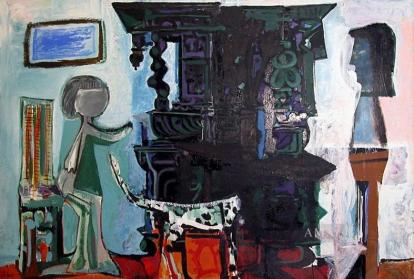
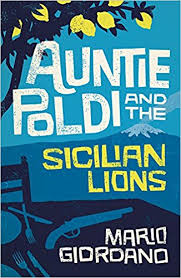 Auntie Poldi was at a crossroads in her life at 60, looking for a home. She decided to leave Munich to settle in Sicily near her late husband’s family. She enlisted Martino, her sister-in-law, Teresa’s, husband, to drive her around looking for the perfect property. Being an intuitive type, she couldn’t define exactly what she was looking for, she only knew that when she felt the energy of the right place, she’d know it. And it needed a sea view.


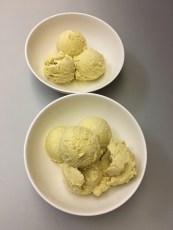 6 tablespoons pistachio ready for the freezer guess which bowl is mine
 There’s something about the Lizzie Borden story that is intriguing in its gruesomeness. This book confirms that I just don’t know who killed Andrew and Abby Borden. Lizzie of course, seems the likely candidate, and behaves strangely enough, a sort of child-woman, as depicted in the book. If the book can be believed, there was a reason why everyone around her tried to shield and protect Lizzie, which is why Emma, her older sister has just as much motive, if not more, to kill her father and stepmother. Lizzie always got what she wanted, including a grand tour trip to Europe, that Emma desperately wanted to do herself, but her father insisted on sending only Lizzie. When Abby first joined the Borden family after Lizzie and Emma’s mother died, she indulged Lizzie, by giving her extra sweets the knowledge of which she and Lizzie kept from her father, who didn’t approve of such indulgences. Emma knew about this, and distanced herself emotionally from Abby, while Lizzie called Abby “Mother” early on. I’m not sure at what point she began calling her stepmother Mrs. Borden, an obvious move to distance herself. The most sympathetic character is Bridget Sullivan, the maid. Just a girl when she left Ireland, she had little comfort in “golden” America. She was hard-working and discreet, doing her job while trying not to judge her employer and his family, in spite of being miserablein their odd little household. I’m assuming that the character Benjamin is fictional, because I haven’t found anything about him specifically, just that there had been a strange man around in the days before the murders. This was an interesting take on the Borden affair, and will perhaps draw more visitors to the bed and breakfast in Fall River that used to be the Borden homestead.
 I was so moved by this story, I hope I can find the words to explain why. There are no spoilers. The jacket clearly says what the book is about. Soon after the discovery of radium by the Curies in 1898, it became the most valuable substance on earth. It destroyed human tissue, so it was put to use battling cancerous tumors with remarkable results. It could restore vitality to the old. Very rich people drank radium water as a tonic, spending as much as $3700 (current equivalent) a glass. Entrepreneurs were scrambling to find lucrative applications of the wonder element. The radium girls were a part of the industry that provided luminescent clock faces to clock companies. The paint, called Undark, was invented in New Jersey and was a combination of radium and zinc oxide. Using very fine brushes to paint the tiny numbers on the dial, the radium girls dipped the brush into the paint, then put the brush between their lips to form a narrow, pointy tip before applying the paint to the dial. With such demand from the public for watches that could be read in the dark, and promising military contracts for luminescent airplane dials, the industry quickly boomed. This story is about corporate greed’s ability to trample on human dignity, ignore ethical and moral responsibility in order to feather the bottom line. The human casualties were legion in this book. I will focus on just one, an emblem, a standard, of what these women suffered simply because they were doing their job. Of the many luminaries in this story, Catherine Wolfe Donahue embodies the heart and soul of this tragic drama, and yet, the book is only marginally about her. All the women take center stage.
 Mrs. May is a widow, having lost Henry in the distant past. Even though she always felt like an outsider in their company, she continued her involvement with Henry’s cousins, Kitty and Molly, and recently became swept up in the drama of a hastily planned wedding for Kitty’s grandaughter, Ann. Mrs. May (Thea) describes herself as “quiet, pleasant, rather dull, but infinitely reliable.” She also thinks of herself as Mrs. May. Early on in the book, she’s constantly longing for the solitary peace of her own flat when she’s visiting Kitty or Molly. When Kitty asked her to host Steve, a member of the wedding party, she immediately said no, but then quickly came around, because she is, after all according to her own description of herself, “infinitely reliable.” We eventually learn what caused Thea to become so passionless, so unadventurous, but that didn’t stop this reader from yelling at her (in my head, of course) to take a risk, do something different, bust out of your routine, meet people – anything to lift her out of the torpor that also became my torpor reading about her life.

 bbfbooksbeautyfood