Category Archives: Uncategorized

The Hottest Dishes of the Tartar Cuisine

THE BOOK:

UnknownOne of the book podcasters I follow recommended Bronsky’s latest book, Baba Dunja’s Last Love. When I looked it up on Goodreads, I found that another person I follow loved this one, so I decided to give it a try. The protagonist, (with an emphasis on “agonist”) Rosa, is living with her daughter, Sulfia, and her husband, Kalganow in a small apartment in Russia. As the title indicates, Rosa was proud of her Tartar heritage and made no secret of it– unlike her husband, who wanted to assimilate completely into Russian culture. Rosa was iron-willed with a healthy ego, constantly “advising” her daughter, to such an extreme that Sulfia had to completely avoid her mother in order to maintain her sense of self. You see, Rosa was disappointed that Sulfia wasn’t more like her. When Sulfia’s daughter, Aminat, was born, Rosa took charge of the infant as though it was her own. An attractive baby, Aminat grew to be quite a handful, despite her good looks. The novel details the struggles between Rosa and Sulfia, Rosa and Aminat, Rosa and Kalganow. And they are just the people who loved her! As bossy and blunt as she was, she had an indomitable spirit, a practiced self-confidence and a no-nonsense view of the world that was hard to argue with.

THE BEAUTY: When Rosa finally saw Sulfia for who she really was, that was beautiful. Sulfia had so many friends because she always knew when someone was hurting, when someone needed something, and when to insert herself into their life. She needed very little herself, her joy was in helping others. When Rosa recognized all this, she, too, saw the beauty that was Sulfia!

THE FOOD: When Sulfia first acted out against her mother, Rosa indignantly asked Kalganow what he was going to do about it. He was eating stuffed cabbage at the time, and took a moment before answering. When he did finally answer he said they must hide Sulfia’s absence, or risk losing their apartment. That did nothing to appease his already livid wife, but if his stuffed cabbage was as good as this recipe, he was a contented man.

Stuffed Cabbage

1 cabbage head (3-4 lbs.)
1 lb ground chuck (london broil, butcher ground for me)
1 lb ground Italian sausage
1 med to large white onion chopped
3 cloves of garlic, minced
1 T olive oil
1 or 2 eggs
1 C cooked rice
½ C Italian bread crumbs
1 family size can Campbell’s Tomato Soup (23 oz)
3 oz tomato paste
pinch of sugar
1 tsp salt adjust to taste
1 T pepper adjust to taste
3 C white vinegar

Preheat oven to 350º degrees F.

Core the cabbage by removing the stem.

Fill a large stock pot with enough water to cover the cabbage. Bring the water to a boil and add the white vinegar. Put the cabbage in the boiling water, stem side down, return to a gentle boil and cook for 10 minutes. Remove cabbage head from pot and put in a colander to drain and cool. Save the water in the pot to use if the center leaves of the cabbage are not fully pliable.

When the leaves have cooled enough to handle, take a paring knife and shave the vein that runs down the center of the leaf. You’re just cutting off the top portion of the vein, and not creating a hole in the leaf. This vein is very tough and needs to be pared down. It will make it much easier to roll the meat mixture in the cabbage leaf. Continue to do this until you remove as many leaves from the cabbage as you can. If the center leaves need more cooking, return them to the pot and boil until tender.

In a saucepan, heat 1 T olive oil and saute the onions until transparent and slightly brown. Add the minced garlic and stir for another minute or so until the garlic blooms.
In a large mixing bowl combine the ground chuck and sausage and mix thoroughly. Add the onion and garlic mixture, egg, rice, bread crumbs and finally add the salt and pepper. Make certain to thoroughly combine the ingredients together. The “meat” mixture will be a similar consistency to meatloaf. It should be nice and moist. If it seems dry, add an additional egg.

Lay a cabbage leaf down on a flat surface. Take some of the meat mixture and form into a large meatball. You may make these as large or as small as you want. Place the meatball in the center of the cabbage leaf. Wrap the cabbage leaf around the meat mixture. Fold the leaf over to cover the meat, then tuck in the sides and continue rolling until the leaf completely envelopes the meat mixture. Place the stuffed cabbage in a roaster with the wrapped edges down. Repeat this process placing the rolls next to each other, until all of the meat mixture is used up.

Mix tomato soup, tomato paste and a pinch of sugar. Pour tomato soup mixture over the top of the stuffed cabbage and reserve a small amount to be used in the next step.

If you have cabbage leaves remaining, cover the entire top of the stuffed cabbage in the roaster. Pour remaining tomato soup mixture on top of the cabbage leaves that cover the  stuffed cabbage. This step will help steam the rolls that lie below and therefore will keep them nice and moist. Put a lid on top of the roaster and bake for 1½ hours.

Allow the stuffed cabbage to sit for 15 minutes before serving.

To freeze rolls for later, allow them to cool then put dinner size portions in freezer bags.  Pour a little of the tomato juice into each bag and freeze.

To reheat place frozen rolls and their frozen tomato juice into a saucepan, cover, and simmer until heated through. Probably about 30 minutes. It’ll go faster if the cabbage rolls are thawed before reheating. Alternatively, place the thawed rolls into a casserole dish, pouring the tomato juice on top. Cover the pan and bake in a 350º degree oven for 30-45 minutes, until heated through.


Golden Child

THE BOOK:

UnknownIt’s been a couple of weeks since I finished this book, and I haven’t been able to get it out of my mind. Although it had all the elements that I love: taking place in a foreign country with a culture that was unfamiliar to me, I had trouble warming to the characters, particularly Clyde, the father of twins Peter and Paul. Paul, the second born, had the umbilical cord wrapped around his neck at birth and suffered oxygen loss, making him “retarded” in his father’s eyes. Clyde was hard on Paul, who was not an easy child, throwing tantrums or acting in the extreme to unexpected stimuli. He also had trouble in school, and consequently hated it. So, guess who the golden one was. Peter was an exceptional student and athlete, and his entire extended family had great plans for him in the form of a college education. I finally really got into the book in Part 3, which was told from Paul’s point of view. Paul’s life was so joyless that he literally folded into himself in most situations, to make himself smaller, invisible. One teacher, Mr. Kavanaugh, saw something more in Paul, and became an ally, but without his father’s support, Paul couldn’t find a reason to value himself . As a teacher, I wondered how Paul’s life would have been if his school had been equipped to handle a student with disabilities. I also was reminded of the tremendous power educators have in making a difference in the lives of their students. While sad, the novel provided a powerful reading experience. The author, Claire Adams was born and raised in Trinidad where the novel was set. Having set foot on Trinidad on a Caribbean cruise, I was struck by how little I got to know about that island. Reading expands my world and takes me to places that, even having been there, I can’t truly know.

THE BEAUTY:

Paul recalled a trip to Mayaro on the coast, taken the previous year during Carnival to escape the noise and general debauchery of the season in Port of Spain. His daddy, Clyde, was in a good mood on the drive, heading to the place where he grew up, near the beach. Since his wife, Joy had stayed behind to help someone with a new baby, Clyde was free to sit out during the evenings with the men having a little drink. The men told stories about the mischief Clyde used to get into when he was little. At sunset when the fishermen came in, they all gathered at the beach to help pull in the seine, and the Paul and Peter ran with the other children to catch the little fish that had gotten caught, throwing them back into the water. Paul had such a fine time, he hoped they could go back to Mayaro for Carnival this year.

mayaro-beach-trinidad-nadia-sanowar
Photo from imagesfineartamerica.com

THE FOOD:

When the story begins, Clyde has just arrived home from a long day at work to find that Paul has not yet come home, and there’s been no water in the house since around lunchtime, leaving the sink filled with dirty dishes and an army of flies buzzing around. Since Joy couldn’t cook the curry she had planned to make Clyde had some eggplant with garlic and onions, a roti from the freezer and some cucumber salad.

Spicy Cucumber Salad
Yield: 2 servings

1 cucumber cut into thin slices (use any kind you like, peeled or not)
2 garlic cloves crushed
1 scallion sliced thin
1 hot pepper seeded, thinly sliced (Habanero or Scotch Bonnet)
10 cherry tomatoes, sliced in half
Pinch of sea salt
Pinch of freshly ground pepper
1 T olive oil
Juice of 1 – 2 limes
1 T cilantro to garnish

Place the cucumber slices in a large bowl with the garlic, scallion, hot pepper and cherry tomatoes. Add salt, pepper, olive oil and lime juice. Gently mix well. Store in refrigerator until serving time.

Bring to room temperature and serve.

IMG_0929


Unless you are someone who really, really loves, hot, hot, hot, do not eat the scotch bonnets. It seasoned the other ingredients sufficiently so that there was mild, but tolerable heat. Delicious.


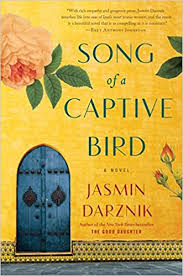
Song of a Captive Bird

THE BOOK:

This book was also in the Random House email of books to look for in 2019, although it, too, was published in 2018. Though fiction, it is based on the life of Forugh Farrokhzad, the Iranian poet, who revolutionized Iranian poetry in both  form and subject. She wrote about her personal life which, was anything but traditional. She didn’t wear a head scarf, dressed in western-style clothing including tight skirts and heels, married her husband under “scandalous” circumstances, and ultimately left her young son and husband for several days to travel hundreds of miles to Tehran to try and get her poetry published. Her story is fascinating- like nothing I’ve ever read. She lived life on her own terms in a very restrictive patriarchal society, that sometimes was very punitive. She sacrificed a lot for the life she chose, yet, still was able to find moments of beauty that nourished her poetry.
THE BEAUTY: Losing her son, Kami, to her husband in their divorce was devastating to Forugh- a pain that she carried with her every day of her life. (In Iran, apparently, the father gets custody of the children.) This poem to him, in its simplicity, is achingly beautiful to me.

A Poem for You

I am composing this poem for you
on a parched summer dusk
halfway down this road of ominous beginning
In the old grave of this endless sorrow.

this is the final lullaby
at the foot of the cradle where you sleep.
may the wild sounds of my screaming
echo in the sky of your youth.

let the shadow of me the wanderer
be separate and far from your shadow.
when one day we reach one another,
standing between us will be none other than God.

against a dark door I have rested
my forehead tight with pain;
I rub my thin, cold fingers
against this door in hope.

that person branded with shame who used to laugh
at foolish taunts was I.
I said I would be the cry of my own existence;
but O, alas that I was a “woman”.

when your innocent eyes glance
at this confused, beginningless book,
you will see a deep-rooted, lasting rebellion
blooming in the heart of every song.

here the stars are all dim,
the angels here all weep.
the blooms of the tuberose here
have less value than desert thorns.

here, seated along every road
Is the demon of duplicity, disgrace and deceit.
In the dark sky I do not see
a light from the bright morning of wakefulness.

wait until once again my eyes
overflow with drops of dew.
I have taken it upon myself to unveil
the “pure” faces of the holy Marys.

I have cast away from the shore of good name;
In my heart lies a storm star.
the place of my anger’s flame,
alas, is the prison’s dark space.

against a dark door I have rested
my forehead tight with pain.
I rub my thin, cold fingers
against this door in hope.

against these ascetic hypocrites
I know this fight is not easy.
my city and yours, my sweet child,
has long been Satan’s nest.

a day will come when your eyes
will sadly quiver at this painful song.
you will search for me in my words
and tell yourself: My mother, that is who she was.

THE FOOD:

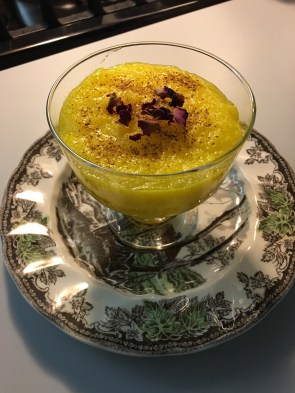
After Leila arranged for Forugh’s release from the Rezayan Clinic and brought her home to her mansion in Tehran, Forugh started writing poetry again. She was eating saffron pudding when she told Leila about having sent out some new poems for a book called, “The Wall.”

Saffron Rice Pudding
Serves : 8

1 C jasmine rice
6 C boiling water
¼ tsp crushed saffron threads
6 T boiling water
1½ C sugar
2 C boiling water
3 green cardamom pods, lightly cracked
2 T pure rosewater, preferably Sadaf brand (see Note)
Ground cinnamon and slivered almonds, for garnish

Rinse the rice  in cold water several times until the water runs clear. Drain completely. In a Dutch oven, combine the rice with 6 cups of boiling water and bring up to a boil. Simmer over low heat until the rice is softened, about 30 minutes, stirring occasionally so the rice doesn’t stick.

Using a mortar and pestle, grind the saffron threads into a fine powder. Add the boiling 6 tablespooons of water to the saffron and let cool. 

Stir the sugar, 2 cups of boiling water and  cardamom pods into the mixture and continue cooking on medium-low stirring frequently so the rice mixture doesn’t stick to the bottom of the pan, until the rice breaks down and the pudding thickens, 20-30 more minutes. Add the brewed saffron and rosewater*, stir to mix.

Discard the cardamom pods. Spoon the pudding into 8 glasses and let cool slightly. Cover the glasses with plastic and refrigerate until thickened, about 1 hour.

 Decorate the puddings with cinnamon, rose petals and slivered almonds. If refrigerated, let stand at room temperature for 25 minutes before serving. 

*Using a high-quality, pure rosewater is essential here. Look for Sadaf brand.

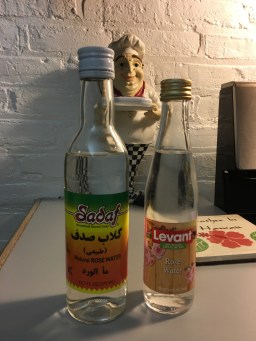
  • IMG_0386As it turned out, what I thought were almonds in my freezer were actually pecans- not a flavor that I thought would complement the pudding. So I dusted them with cinnamon, sprinkled on a few rose petals, and called it dessert. Over the course of two days, my husband has developed a taste for this. I however, could not get into the rosewater, even though I bought “the good stuff.”  The Sadaf rosewater tastes so much better than the supermarket brand I bought a while ago for another recipe, but, sadly, it was not a flavor I enjoyed.
IMG_0858

Sadaf rosewater on the left, Market Basket on the right.


A River of Stars

THE BOOK:

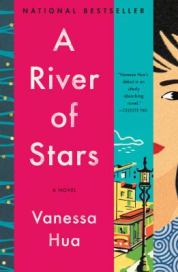
20d7ecdcb6799c27991f4e45f43d83acc59d5b0fI learned about this book from an email Random House sent regarding books to look for in early 2019. It must be coming out in paperback, because the library book I read was published in 2018. I love books that plop me right down in a culture that is foreign to me, and this one delivered on that count in spades. Scarlett’s confinement during her pregnancy brought her to Las Vegas, about as far from her native China as she could get. Never one to fit in, even in China, Scarlett was an iconoclast among the other wealthy Chinese women at Perfume Bay, the resort for pregnant women who want their child to have American citizenship. When things took an unexpected turn, Scarlett had to think fast to forge a way forward for herself, and to keep her baby safe. She was joined in her adventures by Daisy, another outcast from Perfume Bay, and a very young one at that. The two wound up in San Francisco, where Scarlett discovered that she could make a living selling Chinese pork sliders on the street. Another entertaining immigrant story, I’m struck by how many women subsist by selling street food.

THE BEAUTY: “She (Scarlett) felt bound to this place and these people. To the gusts off the bay that swirled dead leaves into a cyclone, mesmerizing Liberty (her baby). To the scent of the meltingly soft egg tarts from the corner bakery that Didi would eat by the fistful if allowed.  The groan of the cars laboring up Chinatown’s steep hills. To the early morning sunlight, golden on the eaves and against Liberty’s cheek. The sweet naps and happy squeals in the apartment, the babies tugging toys back and forth, in a family that fit no definition but their own.” Sometimes family is the one that you make.

THE FOOD: Duh. Chinese barbecued pork sliders on steamed buns with plum sauce.

Plum Sauce

This version of plum sauce can also be used as a replacement for Hoisin sauce. Yield: 3 half-pint jars, 24 oz.

1½ C prunes
½ to 1 C water
⅓ C red onion (chopped)
¼ C soy sauce
¼ C honey
3 T rice vinegar (or apple cider vinegar)
3 cloves garlic (chopped)
1 T white wine
1 T ginger (fresh grated)
1 small pinch star anise (or cloves; less than ⅛ teaspoon)
Optional: 1 tsp finely chopped fresh chile pepper

Combine all of the ingredients in a medium sized pot. Start out with the smaller (½ cup) amount of water. Bring the ingredients to a boil over high heat. Reduce the heat and simmer, stirring occasionally, for 20 minutes.

Add additional water only if the sauce starts to stick to the bottom of the pot. Home dried plums tend to be drier than store bought and may require the extra water.

Turn off the heat and let the ingredients cool for 10 minutes. Transfer them to a blender or food processor and puree the sauce until smooth. (Alternatively, leave the sauce in the pot and, after the cooling off period, puree it with an immersion blender.)

At this stage you have a choice: you can store the plum sauce in the refrigerator for up to three weeks, or you can process it in a boiling water bath so that you can store it in sealed jars at room temperature for a year or more.

To can the plum sauce, return it to the pot over medium heat and bring to a boil. Immediately turn off the heat and spoon the sauce into clean half-pint canning jars. It is not necessary to sterilize the jars for this recipe. Leave ½-inch of headspace between the surface of the food and the rims of the jars.

Press down on the center of the sauce with the back of a spoon to release any air bubbles. Wipe the rims of the jars clean with a moist paper or cloth towel (any sauce stuck there could prevent the lids from sealing.) Process the jars of plum sauce in a boiling water bath for 10 minutes.

Chinese Slow-Cooked Pork Shoulder
Yield: 4 servings

3 pounds trimmed pork shoulder
1 tsp Chinese five-spice powder
1 tsp kosher salt
3 C chicken broth
1 C dark soy sauce
¼ C packed dark brown sugar
2 T toasted sesame oil
½ tsp crushed red pepper
4 scallions, cut into 2-inch pieces
1 garlic head, halved
1 (2-inch) knob unpeeled fresh ginger, thinly sliced

Rub the pork all over with the five-spice powder and salt. Cover with plastic wrap and marinate overnight. In a crockpot, add the chicken broth, soy sauce, brown sugar, sesame oil, and red pepper to the slow cooker. Stir to dissolve the sugar. Add the scallions, garlic, ginger, and the meat, turning it a few times to coat. Cover the cooker, set it on HIGH, and cook for 4 hours. Set the cooker on LOW and cook until the meat is very tender, at least another 2 hours (6 hours total).

Transfer the pork to a platter, cover lightly, and let rest 15 minutes. Meanwhile, pour the cooking liquid into a measuring cup, skim off and discard the vegetables and fat that rise to the surface. When cooled, shred the pork using two forks.

Chinese Steamed Buns
2 C all-purpose flour + more for dusting
1½ tsp instant yeast
a tiny pinch of salt
1 T sugar, optional
5 fluid ounces of milk, more if needed
1T cooking oil

In the bowl of a stand mixer, add flour, yeast, salt and sugar, if using. Add milk and oil. Use the dough hook to blend ingredients. Once blended, knead the dough for 6 minutes on medium. Remove hook, cover the bowl and let the dough rest for around 1 hour or until the ball doubles in size. If you have a proofing option on your oven, use that.

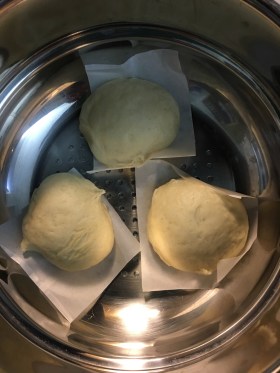
When the dough is double in size, dust the operating board and knead the dough for 3-4 minutes until the dough becomes almost smooth again. Divide the dough into two parts, keep kneading and shape each part into 1 inch thick long log. Cut each log into 6 equal pieces. Shape each piece into a round ball, place on a small piece of parchment paper on a baking sheet, and allow to rest in your proofing oven for about 10 minutes. I used a double boiler, but you can use a bamboo steamer if you have one.

Add cold water to steamer, cover with the lid and bring to a boil. When your pot is ready, cover the lid on the inside with a dish towel so water drops don’t fall on the buns, and place each bun on its parchment in the steamer  Cover with the covered lid and cook the buns in batches, leaving space between them in the steamer for them to rise a bit.

Steam the buns on high heat for around 20 to 25 minutes (depending on the size of your buns).

Remove from the fire and wait for 5 minutes before opening the lid. Serve warm. You can store them over night or freeze them. To freeze, cool them completely, place in an air-tight bag and put in the freezer for no more than a month. Re-steam to soften them before serving.

IMG_0369

To assemble the sliders, cut the steamed bun in half, fill one side with shredded pork, cover with plum sauce to taste, use the other bun half to cover, and enjoy.

IMG_0370


Kind of messy, but really good. The plum sauce was very different- in a good way, and I’d never had steamed buns before that I can recall, although I’ll bet I’ve had them at Dim Sum. Delicious meal, but a fair amount of work.


From the Corner of the Oval

THE BOOK:

UnknownBeck Dorey-Stein’s path to the White House was pretty arbitrary. She answered an ad for a stenographer on Craigslist, never dreaming that she’d actually get a return call. When she did, she  blew off her interview, because after so much rejection, she figured, what the heck. Finally, Bernice, the interviewer, emailed her to say that the job was at the White House. Well, that changed things! As a stenographer, Beck’s job was to follow the president around the country recording all of his public comments, and later transcribing them for the historic record. While this sounds pretty exciting, there was a lot of tedium involved and Beck kept focusing on the fact that she was essentially, just a typist, not anyone important. This is representative of her view of herself at that time in her life. In her mid-twenties, she had had a series of jobs, but not a career. In fact, what she really wanted to do was write, but she lacked confidence. The book gives a snapshot of what the president’s schedule was like, the hierarchy of staff, and a bit of insider gossip. Beck was so in awe of Obama that she became mute whenever he spoke directly to her. But during all her travels, she continued to record her thoughts and impressions, because that’s what she’d done all her life.

We also get a glimpse of Beck’s personal life, as she attempted to balance a boyfriend who was frequently absent from DC on the campaign trail, and her job, which put her on the road. The author really lets the reader in on her weaknesses, including her long term relationship with someone who clearly did not see her as a life’s mate, and who repeatedly hurt her, because she was unable to say no to him, even when yes allowed him to use her. I thought  it was brave to expose so much of her persoanl life in the interest of telling her story. Dorey-Stein has a unique voice that is consistent through the narrative, and in the end, I genuinely liked her.

THE BEAUTY:

When Obama traveled to particularly exotic locations like Jordan, Myanmar, or India his staff would arrange a visit to a culturally significant spot that was not on the itinerary. One such jaunt was to the Shwedagon Pagoda in Myanmar. The 2,500 year old pagoda which enshrines strands of Buddha’s hair and other holy relics is located west of the Royal Lake on 114 acres of Singuttara Hill in Yangon. It stands close to 110 meters tall, is covered with hundreds of gold plates and the top of the stupa is encrusted with 4531 diamonds. The Shwedagon Pagoda consists of hundreds of colorful temples, stupas, and statues.

slider-1
from http://www.shwedagonpagoda.com.mm

Barack_Obama_pours_water_over_Friday_Buddha
Barack Obama pours water over the left shoulder of the Friday Buddha during a tour of the Shwedagon Pagoda in Rangoon on November 19, 2012. Photo by Pete Souza.

THE FOOD:

One of POTUS’s staff drove an ’89 Jeep Grand Wagoneer, which was the car Beck’s family vacationed in. When she first rode in it, she was overcome with nostalgia and she and Jason shared stories of their youth: Jason growing up in Wisconsin, rolling buckeyes and guarding them from squirrels as he watched the balls of chocolate and peanut butter freeze in the snow. Perhaps because I so recently created a snickers drink, the idea of making peanut butter and chocolate candies resonated with me.

Easy Buckeye Recipe

2 C creamy peanut butter (not “natural” peanut butter)
½ C salted butter softened
2 T brown sugar, packed
1¼ tsp vanilla extract
3¼ C powdered sugar
12 oz dark chocolate melting wafers

Combine peanut butter and butter in the bowl of a stand mixer and beat until well-combined.  
Add brown sugar and vanilla extract.  Stir well.

Gradually add powdered sugar until completely combined.  Scoop into tablespoon-sized balls and roll with the palms of your hand until smooth and round. If the dough is too sticky to roll, add more powdered sugar, a tablespoon at a time.

Place on wax-paper lined cookie sheet and freeze for 15-20 minutes. While peanut butter balls are chilling, prepare your chocolate according to package instructions.  Pour into a deep dish. Remove peanut butter balls from freezer, spear the top of each peanut butter ball with a toothpick and, holding the toothpick, dip each buckeye ball into the melted chocolate.
Return to cookie sheet and remove toothpick.  Use the pads of your fingers to smooth over the toothpick mark. Allow the chocolate to harden in the fridge before eating and enjoying. 
Buckeye balls are best kept refrigerated.

*Some people have commented that the addition of brown sugar makes the cookies taste a bit gritty, I have not personally found this to be the case but if you are worried about this you can leave the brown sugar out without adjusting any of the other ingredients


Lab Girl

THE BOOK:

As a child, Hope Jahren spent a lot of time in her professor father’s laboratory classroom where she became comfortable with the tools of science. At a very young age, she developed an abiding love and respect for nature. Her description of the daily trek home from the university with her father in the dead of a Minnesota winter put me in that place and time from the perspective of a child. It also contributed to the picture of who she would become as an adult- someone accustomed to physical hardship and loneliness, for although she spent a  lot of time with her father, there was little that passed between them that even approached personal conversation. When Hope described something about a tree, however, how it hardens in preparation for winter, for example, her voice became reverent, like a preacher delivering a sermon, or a person in prayer. Sometimes her voice broke with emotion, especially when she talked about trees, or her personal struggles with mental illness. I should mention that I listened to an audio version of this book and the author was the narrator. As much as being about one woman’s struggle for acceptance in a male-dominated field, the book is about Hope’s journey to find acceptance, both in her professional and personal life. Thanks to Hope Jahren, I have a new respect and wonder for trees!

THE BEAUTY:

What a great segue above. The remarkable world of trees! In addition to taking their cue to start hardening, not from the ambient temperature, but from the gradual shortening of days, trees (and probably other fauna) have root-to-root signalling systems to communicate with other trees. Studies have shown that trees produce Volatile Organic Compounds (VOCs) as a means to warn other plants of impending insect danger. Nearby plants exposed to the  VOCs prepare their own defense weapons in response. “These plants know that when your world is changing rapidly, it is important to have identified the one thing that you can always count upon.” Trees and I share that knowledge.

W1siZiIsInVwbG9hZHMvcGxhY2VfaW1hZ2VzL2QyYTY5ZDNkYmMyYWZiMmI2ZF8xMjk3NDY1Nzc4NV82MzFiOGQ1ZDdkX2IuanBnIl0sWyJwIiwidGh1bWIiLCJ4MzkwPiJdLFsicCIsImNvbnZlcnQiLCItcXVhbGl0eSA4MSAtYXV0by1vcmllbnThe Ankerwycke Yew, one of the oldest trees in England, has quite a remarkable trunk, at 26 feet in diameter. Estimated at 1400-2000 years old, it is reported to have borne witness to the signing of the Magna Carta. It’s difficult to definitively determine the age of yews because as they mature their trunks hollow out, making it impossible to calculate their age by growth rings. The photo comes from the site Atlas Obscura and the photo credit is SYNX508 on Flickr (Creative Commons).

THE FOOD:

700 miles north of the northern coast of Alaska, on Axel Heidelberg Island in the Nunavit Territory of Canada, Hope and her business partner, colleague, friend, Bill, sampled 100 vertical feet of time, digging deep to recreate a historical record of plants that had been there. In the punishing climate, with grueling tedious work, Hope and Bill pampered themselves daily: “At least once a day, we indulged ourselves in the following way: we’d plop waist deep in the crunchy rubble and pull out some treats. Nothing tastes as good as a Snickers bar and a hot thermos of coffee in the cold middle of nowhere, and once a day we focused all of our energy toward savoring this pleasure in quiet, companionable reflection.” Snickers is my favorite candy bar, but I wondered what would a Snickers martini taste like? After a bit of trial and error, I arrived at…

Snickers Martini
serves 2 (large martinis)

5 ounces 360 Double Chocolate vodka
2 ounces hazelnut liqueur
.05 ounces amaretto
2 T peanut butter powder
1½ ounces French Vanilla Creamer
2 ounces Ghirardelli Caramel Sauce ( zap it in the microwave for 15 seconds to get the texture more liquid

Fill a cocktail shaker with ice.  Add vodka, hazelnut liqueur, amaretto, peanut butter powder, French Vanilla creamer, and caramel sauce to the shaker.  Shake for about a minute to get all ingredients well blended. Strain into martini glasses.

IMG_0012


Tastes like Snickers!


I Am, I Am, I Am

THE BOOK:

9780735274112This is my first Maggie O’Farrell, an autobiography, when what she’s best known for is her novels. Simon (The Readers) loves and recently did a vlog with her at a reading. The subtitle “Seventeen Brushes with Death” was somewhat off-putting, but because this book was highly praised and got 4.05 stars on Goodreads, I forged ahead. The epigraph read: “I took a deep breath and listened to the old brag of my heart. I am, I am, I am,” by Sylvia Plath in The Bell Jar. Maggie’s heart is still beating in spite of 17 different opportunities for it not to be. The first story takes place at a holistic retreat where 18 year-old Maggie has a summer job as a chambermaid. When she’s finished tidying the rooms, she’s free to spend the afternoon hiking the mountain trails by herself. When she meets up with a man she had previously encountered, she knows that something is amiss, but keeps her cool, and finds a way to get safely back to the lodge. She has an incredible intuition, but she is not always able to convince others that what she intuits is really going to happen. The ending of this story was especially chilling. Maggie’s wanderlust takes her all over the world, including Hong Kong, Chile, India, Spain, China, Bolivia, and France. As Maggie reveals more about herself in each successive chapter, I began to see what a remarkable person she is, and to understand the aptness of the title. For Maggie, with her challenges and unique physical traits, the beating of her heart is the constant reminder that yes, she is alive: I am. The last of the chapters, number 17 where she writes about her daughter was so emotionally jarring, that when I reached the end, I had a strong reaction to this remarkable woman’s tenacity, and the power of a mother’s love.

THE BEAUTY: In the 16th chapter, Maggie explains how the brain is the communication center of the body, sending messages from neuron to neuron by the synapse that bridges the gap between them. I thought about how primal that is, and also, kind of magical. Think about 100 billion nerve cells sending electrical information in the control center of the brain to animate the human body. It’s an organic computer! I searched for images of this brain activity and was surprised at the beauty of the images as art. These images were produced by scientists at the Queensland Brain Institute at The University of Queensland in 2017.

IMG_4669The image shows the nanoscale movements of individual molecules that are critical in mediating communication between neurons. Knowing how these molecules are organised, and how they move, is at the heart of understanding the brain in health and disease. I chose this one because it looks like love to me.


IMG_4671


Looks like fireworks! This image shows nanoscopic movements of single actin molecules. Actin is an essential protein found in all cells of plants and animals.


THE FOOD: Maggie had truly settled into her life in Hong Kong when she found herself eating a bowl of congee every morning for breakfast before heading off to work.

Congee

¾ C medium grained white rice
6 C chicken stock
1 inch length of fresh ginger, peeled and roughly chopped
chopped scallion and cilantro to garnish
white pepper to garnish
soy sauce to garnish

Wash the rice, drain and transfer to a zip lock bag. Freeze for at least 8 hours or overnight.

In a medium pot, bring the chicken stock to a boil. Add the frozen rice and ginger slices and bring to a boil again, stirring to prevent the rice from sticking. Reduce the heat to a low simmer and cover and cook for about 15 minutes, periodically stirring, as the rice thickens quickly. Remove ginger slices. If the porridge is too runny, simmer with the lid off for another 5 minutes. If you want the porridge creamy smooth, blend with an immersion blender.

Serve immediately. Garnish with the cilantro, scallion, white pepper and soy sauce, to taste.

IMG_4717


We absolutely loved this. I would like to try it with sauteed mushrooms and chives. We couldn’t stop eating it!


Sight

THE BOOK:

38533335

The book began auspiciously with a lovely acknowledgement:
“Finally, thank you as always to Ben, who has never questioned the importance of my work to me, but who has built us a life into which it fits.”

In the first section, the unnamed protoagonist whom I shall call “P” from here on muses about whether or not she wants to have children. She worries that she doesn’t have what it takes to be a good mother, which seems to me like a logical thing to worry about, although, coupled with her own loss of her mother when she was just twenty-one, she takes the worry to an extreme. As she prepares her mother’s house for sale, the litany of things she doesn’t know how to do wears away at her confidence in herself, and causes a lovely reflection on grief, that universal from which no human can escape. “This is where grief is found, in these suddenly unfilled cracks, these responsibilities-minute, habitual-which have lain elsewhere for yeats and which, having failed amongst grief’s greater broil to be reapportioned, are overlooked in favor of the more dramatic, until even the ordinary starts to crumble. If I thought, all through those freezing months I spent alone in a house whose owner had abandoned us, that I did not grieve, then it was because I had been expecting something else-something both larger and lesser, a monument or a mountain, simple, scaleable, and not this seeping in of space to undermine the smooth continuance of things. I had thought that loss would be dramatic, that it would be a kind of exercise, when instead it was the emptiness of evertything going on as before and nothing working as it ought.”

Sight is mentioned repeatedly in the novel, in the context of truly seeing another person, their essence, their core. Juxtaposed wth P’s worrying about having children, grieving for her mother and trying to understand herself, the author gives us glimpses of historical figures who attempted in their various fields of expertise to illuminate something about being human. Wilhelm Rontgen, discoverer of x-rays, in exposing his wife’s hand to an x-ray, shows the bones of her hand, literally seeing inside her. Sigmund and Anna Freud attempt to understand human behavior through psychoanalysis, another form of “seeing inside.” Brothers William and John Hunter learn about human anatomy by literally peeling back layers to expose what lies underneath the skin. (That was a more gruesome discussion, that I admit, I skimmed!) At one point P. says that the price of sight is wonder’s diminishment, as in Rontgen’s wife’s hand.

There were so many times that I paused after reading a particular passage to think bout what I had just read. It’s a thoughtful book, that easily bears multiple readings.

THE BEAUTY:

Johannes suggested that P. spend a weekend by herself, so that she could really concentrate, really think, about whether or not having children was for her. She went to a tiny stone-walled cottage near Hay-on-Wye in Wales. When I googled it, it turns out that Hay-on-Wye is a book town! With more than 20 bookshops, it’s the world’s largest purveyor of second-hand and antiquarian books. There’s an annual book festival that Bill Clinton dubbed “Woodstock of the mind.” This year’s festival was heavy on politics, not surprisingly, with all the political books currently on the market. It took place May 24 to June 3, and has been added to my ever growing list of   places to go when we visit Scotland!

JS77069838

Hay-on-Wye-Booksellers

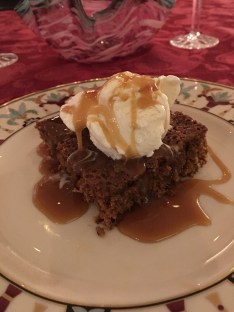
THE FOOD: Every year at Christmas, P’s grandmother, Dr. K., stayed with P and her mother at their house, for 10 days, from December 21 to December 30. P’s mother, ordinarily a a lazy cook, turned her attention to the kitchen, where she took refuge, making among other things, parkin, a traditional sponge cake from Northern England flavored with molasses, oatmeal and ginger. Now that the weather has cooled, and I can comfortably bake again, parkin it is!

IMG_4716


This was really different, but delicious, and of course, everything tastes better with a little ice cream and caramel sauce on it! With all the books I’ve read set in England, I had never before heard of parkin.

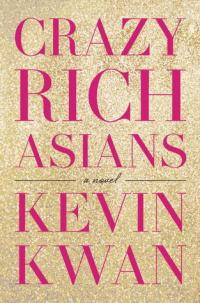
Crazy Rich Asians

THE BOOK:

16085481Rachel and Nick are an ordinary (if living comfortably in New York City is ever normal) couple. Two years into their relationship, never having shared anything about his family, Nick invited Rachel to attend his best friend’s wedding and spend the summer in Singapore, which would, of course involve meeting his family- who are: CRAZY RICH ASIANS. This is another version of the “haves and the have-nots;” about who we are better than and who we suppress without ever really examining what makes a person worthwhile. Your clothes are better than mine. Does that make you better than me in any meaningful way?

Nick and Rachel are equally good people, but Nick’s family, believing that wealth must insulate them from ordinary people, throws up a roadblock to sabotage their relationship. We have all aspired to wealth at some point in our lives. As Tevye said in Fiddler on the Roof, “Would it spoil some vast eternal plan if I were wealthy man?”

It’s a fun, funny, and entertaining book. The movie has just opened and I can’t wait to see it.

THE BEAUTY: The pictures of Singapore are stunning. This one from CNN.com shows the Marina Bay Sands luxury hotel in the background. The spaceship-like structure on top connecting the three buildings is the Skypark, with an infinity pool, garden walk, and restaurants 57 stories above street level. In the foreground is the Esplanade-Theater of the Bay along the waterfront.

http---cdn.cnn.com-cnnnext-dam-assets-150806121501-sg-50---lead-image

THE FOOD: According to this book, every Singaporean has an opinion about where to get the best satay, and differences of opinion can lead to heated debates. As Rachel explained to her mother, “Let them be, Mom. Let them be. This is just how they all are.”

Singapore Satay
serves 4

1 large red onion, chopped
2 large garlic cloves, chopped
3 stalks lemon grass, chopped
1 T peanut oil
1 T ground turmeric
1½ tsp brown sugar
1 tsp ground cumin
1 tsp ground ginger
salt and black pepper to taste
1 lb skinless, boneless chicken breast halves – pounded thin
12 wooden or bamboo skewers

In a large nonreactive bowl, stir together the onion, garlic, lemon grass, soy sauce, peanut oil, turmeric, brown sugar, cumin, ginger, salt, and pepper. Reserve about 2 tablespoons of marinade in a small bowl, and refrigerate until cooking time. Mix the chicken breasts into the remaining marinade, stir to coat well, and marinate in refrigerator overnight.

About 30 minutes before serving, soak the skewers in water. Preheat an outdoor grill for high heat, and lightly oil the grate, or cook on a stovetop griddle, getting the griddle very hot before spraying with cooking spray.

Remove the chicken breasts from the bowl, and discard the used marinade. Cut each chicken breast on the diagonal into 6 long strips, and thread a chicken strip onto one of the soaked skewers. Grill the skewers on the grill, turning frequently and basting with the reserved marinade, until the chicken is cooked through with brown, crispy edges, 5 to 8 minutes per skewer. On the stovetop, turn the heat down to medium-low when you put the skewers on the griddle, cooking low and slow until the chicken is cooked through, but not overcooked, 5-8 minutes per skewer.

IMG_4667


The marinade was delicious, not too spicy. Serve with your favorite dipping sauce, soy sauce or Sriracha. (When it rains, we grill inside.) Because I’d never made satay before, this was a fun one for me. I don’t think I pounded the chicken enough, so be careful to pound your chicken evenly and thinly.

The Story of Arthur Truluv

THE BOOK:

UnknownI had never read Elizabeth Berg, but a friend has read a lot of her, so I was hoping that I would like this book. I did! Like A Man Called Ove, it had the potential to be cloying, but also like Ove, it wasn’t. Ove was a curmudgeon, Arthur is not. He’s a mensch. A widower, still missing the love of his life, Nora, he lives a quiet, somewhat lonely life with Gordon, the cat, who Nora adopted from the shelter. When she first brought Gordon home, she called him Precious! When we first brought Mary home, I kept calling her “Precious,” (because she was) Finally, Jim said to me, “We’ve got to get a name for this cat. I can’t keep calling her Precious,” just like Arthur said to Nora. Throughout the book, I kept remarking out loud, “Oh, my, that’s just like us, (or me).” Like when on page 18, Lucille the neighbor gives Arthur a tin of snickerdoodles. There was a book for children called Maniac Magee by Jerry Spinelli, that we used in our 6th grade literature class. Set in Philadelphia, there was a mention of snickerdoodles, which my Philadelphia teacher friend knew how to make, so when we finished the book, we’d serve snickerdoodles. One more personal connection, although there were many more: There was a a forty-ish character described as “a kind of blowsy-looking blonde named Trudy.”

The book is about the unlikely relationship of Arthur, Maddy and Lucille. Arthur is very intuitive, inventing biographies of people about whom he knows very little. He’s also kind and friendly and matter of fact. Maddy isn’t afraid to befriend people much older than her, and Lucille is one heck of a baker. The book ends with a heart-warming scene, one that makes you feel really good. One that makes you wish the book were a little longer.

THE BEAUTY: It seems that I’ve read several books recently where the protagonist has recently lost a spouse, and the will to live. What the books have in common is that the way through grief is by maintaining connections to other people. There is healing power in taking care of someone else. I turned to Google for songs about friendship and since there was one by Bruno Mars, I chose it.

https://youtu.be/L14QtTGtjF4

THE FOOD:

You probably though it was going to be snickerdoodles, but surprise! It’s not. There’s an important scene in which white chocolate pudding with blackberry curd plays a role. Also, the dessert is very impressive looking. Also, even though there was a lot of delicious food mentioned throughout the book, this is the recipe my husband chose when given the choice of hamburger soup, snickerdoodles, or the pudding.

White Chocolate Pudding with Blackberry Curd
Serves 4

For the pudding:

3 T cornstarch
1 T sugar
½ tsp table salt
2¼ C whole milk
6 oz white chocolate, chopped
½ tsp vanilla

For the blackberry curd:

½ C fresh blackberries
1 T freshly squeezed lemon juice
¼ C sugar
Pinch of salt
1 large egg
2 T unsalted butter, cut into small pieces

To make the pudding, combine the cornstarch, sugar, and salt in a heavy bottom saucepan. Whisk in the milk, scraping the bottom and sides of the pan with a heatproof spatula to incorporate the dry ingredients. Place over low heat and stir constantly, scraping the bottom and sides. Use a whisk as necessary, should lumps begin to form. After about 15 minutes, when the mixture begins to thicken and coats the back of the spoon, add the chocolate. Continue stirring for about 2 to 4 minutes, or until the pudding is smooth and thickened.

Remove from the heat and stir in the vanilla. Strain the pudding through a fine-mesh strainer into a bowl with a spout, and pour into individual serving dishes. Chill in the fridge for at least 4 hours.

Meanwhile, purée berries in a food processor or blender until as smooth as possible. Press through a fine-mesh strainer to remove seeds. You should have between 3 and 4 tablespoons of purée.

Whisk together the blackberry purée, lemon juice, sugar, salt, and egg in a heavy 1-quart saucepan. Stir in the butter, and cook over moderately low heat, whisking frequently, until the curd is thick enough to hold the marks of the whisk, and until the first bubble appears on the surface, about 4 to 5 minutes. Divide the curd among prepared cups, gently spreading it on pudding surfaces.

Let chill for 1 hour before serving.

IMG_4661

My dessert cups held 8 ounces and were too big because the pudding is so filling. In the future I would use champagne flutes with iced tea spoons to serve. It really is a beautiful presentation, and the blackberry curd is like nothing you’ve tasted before. If you can’t get blackberries, any berry will do. It’s just that the blackberry has such a distinct color, it’s the preferred berry.