THE BOOK:
 I’ve read the last two Gamache books, the first two, and one in the middle, so with this book, I attempt to read the rest of her books in publishing chronological order, this being number three. What I love about these books is so similar to why I love Donna Leon’s Commisario Brunetti books. Both men are intelligent, well-read, reserved, confident, they love their wives and their family, and they have an unwavering sense of justice that does not always fit into the bureaucratic morass that is their respective law enforcement agency policies. In addition, I always learn something— and there’s food!
In this installment, Gamache is called once again to the rural village of Three Pines to investigate a murder. A small group of villagers held a seance in a deserted, haunted house where the murder took place. Most of the characters are recurring, making each new installment an opportunity to get to know more about these characters who feel like friends. I love when Gamache imparts wisdom to his junior staff, like giving Lemieux a crash course in catching killers. “There are four statements that lead to wisdom. I don’t know. I’m sorry. I need help. I was wrong.”
THE BEAUTY:
During the murder investigation, Inspector Beauvoir and Gamache are looking at a high school yearbook, trying to make a connection between the picture of a lovely young cheerleader and the mousy woman seated on the other side of the Bistro. If the cheerleader is indeed the same woman, she may be the murderer. Beauvoir looked at Gamache and said, “You think maybe she magically transformed herself from a beautiful cheerleader into that?” Gamache replied, “I have seen flowers come in stony places, And kind things done by men with ugly faces.”
An Epilogue
John Masefield
I have seen flowers come in stony places
And kind things done by men with ugly faces,
And the gold cup won by the worst horse at the races,
So I trust, too.
THE FOOD:

Slow cooker Quebec-style baked beans
Everyone handles grief differently. When Beauvoir went to question Hazel Smyth in her kitchen after the death of her best friend and roommate, every pot was out, either in use, or in the sink. On the stove there was a brown jar filled with a classic Québécois dish, baked beans. Since my husband loves baked beans, this had to be the dish for this book. The slow cooker made it easy.
Quebec Maple Baked Beans
Servings 5 cups
1 pound dry beans (navy, great Northern) 2-1/3 cups
water for soaking and precooking
1 medium onion
¼ lb salt pork or bacon
¼ C pure maple syrup
⅓ C brown sugar
2 T unsulfured molasses
2 T tomato paste
2 tsp dry mustard
3 C water for cooking
1 teaspoon salt
pepper to taste
Rinse and sort the beans; remove any pebbles or debris. Place the beans in a large bowl. Fill with water in order to submerge the beans by at least two inches of water.
Soak overnight (8-12 hours).
The next day, transfer the drained and rinsed beans to a large pot. Re-fill with water and bring to a boil. Turn down the heat and simmer for about 45 minutes. Remove from heat and rinse again.
Transfer the rinsed precooked beans in your slow cooker. Add the rest of the ingredients, stir together and place the whole onion in the center.
Cover and cook on low heat for 6 to 8 hours or until the beans are tender. If the mixture appears dry, you can add some water.
Serve immediately or refrigerate and served reheated the next day. The baked beans can also be frozen.
 I have not read any of Reichl’s books, of which there are quite a few, but I have heard several reviews on the podcasts I follow, and have thought that I might enjoy her writing. When this book came out, it had everything I love in a book. (It seems that I am quite a fan of memoir, if I look back at the number of books I have read in that category.) Reichl grew up in New York, one of my favorite places, so there promised to be a lot about the the city I ❤️. She was something of a hippie, with a laid back attitude, untameable hair, and a disregard for fashion. She loved food! She was a food critic for the New York Times so she dined at some memorable places on both sides of the approval spectrum. And the pièce de résistance, she was the last editor of Gourmet Magazine, a periodical I devoured monthly in the 80’s and 90’s. I made my first standing rack of lamb using a Gourmet recipe, and years later decided to forego a Bermuda vacation in order to buy bone flatware for a scary Halloween dinner that was featured in an October issue. And there are recipes! I really enjoyed the book and the writing and the insider look into the world of magazine publishing in its heyday. I still miss Gourmet.
 Another highly anticipated debut that I read about at the Kirkus website’s “buzzed about books,”

 This is my third, and favorite, Brookner. Although an extremely quiet read, where the action takes place in a hotel during the off-season, I enjoyed the surprises (to me, anyway) in the plot. I also enjoyed the writing, at times witty, at times wry. While I can’t imagine the color of “over-cooked veal,” (how Edith describes the furnishings her friend encouraged her to purchase for her bedroom) I thoroughly enjoyed the description. Another example of the writing was, after witnessing an unpleasant encounter between two of the female hotels guests, Edith thinks, “The company of their own sex… was what drove many women into marriage.” I don’t share the sentiment, but I was amused by the thought.

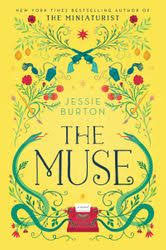 In 1967, 26 year-old Odelle Bastien was unhappily working in a shoe store in London, dreaming of becoming a writer. An immigrant from Trinidad, she had spent the last five years applying for all manner of jobs, only to be turned away when she showed up for the interview. Then, one June day, a letter changed Odelle’s life. Marjorie Quick of the Skelton Institute not only offered her a job as a typist, but acknowledged the accompishments listed in her curriculum vitae. Finally, Odelle felt that she was coming closer to what she had been taught were Important Things: culture, history, art. Odelle was reserved, living simply with her college roommate, Cynth. In the workplace, she was quiet, suspicious even, of her employer’s motives, so she kept the details of her life to herself. As the title suggests, a muse can be the difference between creating art or not creating it. A muse can be inspiring or encouraging, helping the artist find their voice and the confidence to keep making art. There were several muses in the novel, highlighting how important it is to have someone believe in you, and believe in your work, but Odelle’s muse was the most interesting part of the story.

 In Leon’s latest Brunetti installment, Guido takes on an investigation for his father-in-law, Count Falier, once again walking a fine line between family interests and pursuit of crime someone is murdered. As in all Commisario Brunetti books, the reader watches as Guido attempts to serve justice in an astoundingly corrupt environment. We may not always agree with his tactics, but have to concede that his motivation is pure, ethical and just, if not always legal, or “by the books.” In this volume, Brunetti is rereading “The Trojan Women” by Euripedes. Thinking about the spoils of war that created the plight of the Trojan women, he sees a contemporary parallel in the thousands of women from eastern Europe flooding into the west: living spoils of war, forced into prostitution. Reflecting on the motivations for war in modern times, Guido contrasts the ancients. The Trojans and Achaeans were seeking glory, fame, and honor for their name in perpetuity, unlike today’s wars, motivated by greed in the form of land and spoils. Whatever the motivation, there is one clear group in both ancient and modern times that suffers, powerless to control their own destiny.

 I fell in love with this book early on in my reading. It was rich in history, (a time period I know little about) cultural references, cultural differences, and exquisite writing. Midhat Kamal was the son of a wealthy textile merchant in Nablus, a town in Ottoman Palestine. He was educated at a boarding school in Constantinople and went off to France to study medicine in 1914. It truly was culture shock for him, in spite of his having taken French in school, he knew nothing of French culture, save for the somewhat jaded perceptions shared by Faruq, a fellow passenger on the ship to Marseilles. In Montpellier, he boarded in the home of Doctor Molineau, a member of the medical school faculty, and his daughter, Jeannette. Predictably, Midhat fell in love with Jeannette. The two concealed the nature of their relationship until a shocking turn of events opened Midhat’s eyes to the inherent French prejudice towards Arabs in general, and Midhat specifically. As the story unfolds, it’s sad that so frequently in fiction and real life, people’s destinies are changed irrevocably by what is not said. The book sort of fell apart for me in the third part, with some plot points that didn’t make sense to me, but it didn’t spoil my overall enjoyment of the book. It was an ambitious undertaking for a debut novelist and the beginning of a wonderful literary career.
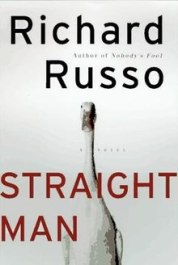 I heard a trusted reviewer say that this book was laugh-out-loud funny, and though I had unsuccessfully tried a Russo book before with a similar claim, I decided to give this a try. In fairness, rare is the occasion that I, (and I believe most readers out there) truly emit audible sounds of mirth in response to reading a book. This was no exception. But while I may not have made noise, I made note to myself many times of the cleverness of a thought, or a turn of phrase, with the overall effect being: this is a very amusing, witty, dare I say ironic, if irony also incorporates good-natured sarcasm, book. In his life, the main character, William Henry Devereaux, Jr., plays the straight man. His friends know that he is never serious, and can be a real jerk in service of his humor at their expense. And yet, they are loyal to him, all the while telling him what an ass he is. He’s blessed with a beautiful wife who understands and loves him, even though she recognizes the many ways that he is not present in their shared life. The action takes place in rural Pennsylvania where “Hank” is an English professor, serving as interim head of the department during a serious fiscal threat to the livelihood of his colleagues and himself. Did he cut a deal with administration? Did he make a list ranking his fellow academics according to their usefulness in the department? These are the questions that everyone buzzed about. In the end, Devereaux is true to himself, and despite rampant departmental gossip and speculation, his friends and colleagues finally recognize what they should have known all along about him. A very satisfying read!
 I came to
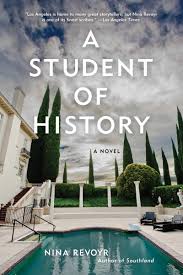 The Book Cougars recommended this one, so it went to the top of my library holds list. I suggest that editors refrain from making comparisons to books like
 bbfbooksbeautyfood