This is my least favorite cover of the year so far, but not my least favorite book. This was one of those reads that was hard to put down. A mystery, Bohjalian managed to baffle me so that until the very end, I did not know how the mystery would be resolved. Having been disappointed by the endings of a couple of books I have read recently, this was a most satisfying conclusion. I would love to see how Bohjalian maps his plots, because the details here add up to a narrative that is completely believable, and even though, as the reader, I’ve had most of the information necessary to solve the mystery all along, I was surprised by the ending. In a positive way. We know from the start that Annalee Ahlberg went missing from her home while her husband, Warren, a professor at a local college, was at a poetry conference in Iowa City, and her two daughters, Lianna and Paige, were asleep in their rooms, not far from her bedroom. We know that Annalee suffered from somnambulism, but since spending time at a sleep clinic years before, had not had any recent episodes. I believed at various times throughout the book that a couple of completely innocent characters (I later found out) were up to no good. As one can imagine, having been in the house at the time of her disappearance, both daughters felt guilt and remorse for not waking up that night and saving their mother. The worst part for everyone involved was not knowing where she was, what happened to her.
THE BEAUTY:
The beauty in this story is that a family can suffer a tremendous trauma, spend time in an awful limbo of pain and remorse, as separate individuals, all while going through the motions of living, until finally, each one in their own way comes out on the other side. Changed, but moving forward.
THE FOOD:
The recipe I’ve chosen is from a significant day in the life of Ahlberg family. A lot of the food mentioned was prepared food from the local Bartlett General Store, like potato salad and Mexican wraps. I got the sense, however that this was a dish that Annalee actually prepared herself. And, since it’s something I’ve be wanting to make and had already researched some recipes, it was the perfect blend of opportunity and research that made sampling this dish easy. I’ve become interested in curry dishes since reading Eight Flavors where I learned that curry had a history in England that found its way to America before any major Indian/Pakistani migration. A dish called Coronation Chicken was served at a luncheon in 1954 celebrating Elizabeth II’s ascension to the throne. It was based on a recipe called Jubilee Chicken that was served for Elizabeth’s grandfather, George V’s celebration of his Silver Jubilee. About as royal as it gets in my house however, is four-legged “Prince George,” who would probably love it, but would get very sick from the mayonnaise.
Curried Chicken Salad
3 C cooked rotisserie chicken cut into bite size chunks
¾ C mayonnaise
2 T dry white wine
⅛ C Major Grey’s chutney
1½ T curry powder
½ tsp salt
¾ C medium-diced celery
¼ C chopped scallions, white part only
For the dressing, combine the mayonnaise, wine, chutney, curry powder, and ½ teaspoon of salt in bowl. Stir until smooth.
Combine the chicken with enough dressing to moisten it well. Add the celery and scallions and mix well. Refrigerate for a few hours to allow the flavors to blend. Serve on naan with some lettuce or mixed greens.
It’s no secret that I love the writing of Alexander McCall Smith. Having begun with the No. 1 Ladies’ Detective Agency series; I moved on to Portuguese Irregular Verbs, the Professor Dr. von Igelfeld series; then the Sunday Philosophy Club series with Isabel Dalhousie and company. But my favorite of all is the 44 Scotland Street series, of which this book is the most recent addition. I love the cultural reflections, the digressions and ruminations about friends and loyalty and topics in the day’s current events. I love the way the characters love Edinburgh and Scotland and each other. I also love the way each book ends in a poem by Angus Lordie. The poems celebrate the uniqueness of Edinburgh and the common culture shared by the group of friends gathered around Domenica and Angus’s dinner table. The last stanza of the current one:
“What we lose, we think we lose forever,
But we are wrong about this; think of love –
Love is lost, we think it gone,
But it returns, often when least expected;
Forgives us our lack of attention, our failure of faith,
Our cold indifference; forgives us all this, and more;
It returns and says, “I was always there.”
Love, agape, whispers: Merely remember me,
Don’t think I’ve gone away forever:
I am still here. With you. My power undimmed.
See. I am here.”
THE BEAUTY:
After having visited the Scottish Portrait Gallery with his Granny, Bertie developed his own prefererences for Scottish painters. On an outing with his mother, they pass the gallery and Irene says, “Remind me, Bertie, to take you to look at the Poussins.” Bertie tells her that he’s not sure he likes the way Mr. Poussin painted. He goes on to say that he likes the way Mr. Raeburn painted, expressing a preference for portrait of The Skating Minister, the Reverend Robert Walker skating on Duddington Loch.
Poussin on the left, Raeburn on the right. Are you in the Bertie camp, or Irene’s?
THE FOOD:
When Matthew learns that Bruce’s new girlfriend Clare, was looking for a position, and Elspeth had just fired the Danish au pair and her assistant, he invited Bruce and Clare to meet Elspeth at their home at Nine Mile Burn. When they arrive, Elspeth invited them in for tea and scones, and a philosophical discussion ensues about one’s individual attitudes being determined by one’s cultural background. Moving the concept along further, Elspeth pronounces that food, even scones, carry cultural symbolism, and says, “They’re rather a polite food. Bourgeois? Lace doilies? Edinburgh?” After further discussion, Matthew concludes, “Perhaps everywhere in Scotland is… is prone to scones. Maybe it’s just part of our inheritance.” My husband and I too, are prone to these scones.
Scottish Scones
1½ C all purpose flour ½ C currants
1 C quick cooking oats 1 egg, beaten
¼ C white sugar ½ C unsalted butter or margarine, melted
4 tsp baking powder ⅓ cup milk
½ tsp salt zest of 1 orange (optional)
Combine flour, oats, sugar, baking powder, salt, and currants and zest, if using, in a large bowl. (I ran the oats through the food processor to make its texture more flour-like.)
Mix well. Make a well in the center.
Beat egg until frothy, and mix in melted butter or margarine, and milk. Pour into well. Stir to make a soft dough. If the dough is too dry, add more milk.
Pat dough into two 6- to 7-inch circles. Transfer to greased baking sheet. Score each top into 8 pie-shaped wedges.
Bake at 425º for 25 minutes, or until risen and browned.
I wish I could remember where I got the recommendation for this book, so that I can file for future reference that it is a source I should pay attention to. I loved the book. I hope that the fact that it is categorized as a Young Adult book will not put some off from reading it. It packs a very powerful emotional punch, worthy of any “adult” reading. In the author’s note, Patrick Ness explains that he was asked to take on the writing of an idea by Siobhan Dowd, who died before she was able to complete the work. All he had was the characters, a premise, and a beginning. He was an admirer of her previous books, but had not met her. I think it was very brave of him to take this on, and can’t imagine that it could have been any better in any other writer’s hands. Consequently, I have put both Patrick Ness and Siobhan Dowd of my list of authors to read. This is a terrific story.
THE BEAUTY:
Without giving away any plot details, the beauty of this book is a simple universal truth: the power of forgiveness. There are times in our lives when we have to consider forgiveness in one of its many forms. The thought process that preceeds the act can be grueling and painful, but ultimately, liberating and life affirming.
THE FOOD:
Conor had a fond memory of how much fun he and his mother had together in the recent past. She had taken him to his favorite Indian restaurant, and let him order as much vindaloo as he wanted. Then, instead of going home afterward, she took him to see a movie he’d already seen four times, even though he knew she was sick of it, and it was a school night! The recipe below recalls that happy day.
Vindaloo Vegetables
1 T olive oil 2 small carrots, chopped
½ tsp dry mustard 4 C cauliflower cut into small florets
1 tsp ground coriander 1 small red bell pepper
¼ tsp cardamom 2 small zucchini cut in ¼ inch slices
½ tsp cayenne pepper 1 C diced tomatoes
½ tsp turmeric ½ C chicken broth
1 tsp ground cumin 1 15.5 oz can kidney beans, drained
¼ tsp cinammon salt, pepper to taste
½ tsp paprika 1 T white wine vinegar
1 large onion, chopped chopped cilantro for garnish
3 cloves garlic, chopped
1 T chopped ginger
2 chopped serrano peppers, seeds removed
Heat olive oil in a large saucepan. Add spices and stir for 30 seconds to allow spices to bloom. Add onion and saute until it begins to turn translucent (about 5 minutes), then add garlic, ginger and serrano peppers and saute for another minute. Stir in white wine vinegar and ½ cup of chicken broth, then add add the carrots, cauliflower and red pepper and cook for 5 minutes, stirring frequently. Stir in zucchini, tomatoes, kidney beans and ½ cup chicken broth. Bring to a boil, reduce to a simmer, cover and cook for 15-20 minutes or until all vegetables are tender. Serve over rice, garnish with chopped cilantro.
NOTE: This dish was seriously better the second day. The flavors were evenly blended and there were layers of taste complexity missing from the night before’s servings.
Beryl Markham was a woman who chose her own path in life, often acting outside of the social norms of the time, leaving her frequently alone and friendless, and bringing truth to the phrase “well-behaved women seldom make history.” She was the first female licensed horse trainer in Africa, the first woman to fly solo across the Atlantic from east to west, an adventurer and author. Her path frequently crossed that of Karen von Blixen, who was 17 years her senior. Beryl played a very small role in Blixen’s memoir Out of Africa. Her story, however, is one that very much needed to be told, if only as a reminder of what American women today take for granted relative to their antecedents around the turn of the twentieth century. This book is rich in its description of the landscape of Africa, and conveys the love that those who have lived there, have for the land and its people.
THE BEAUTY:
McLain mentions many animals in her descriptions of landscape, some of which I had heard, but was unclear on what they looked like. Here are a skink, vervet, hyrax and foam-nest tree frog.
This is a fire skink, a reptile that lives in tropical forests in Western Africa. They love to burrow and hide and are relatively shy and reclusive, but can become tame in captivity, although not in this house!
This lovely creature is a vervet monkey, groups of which have been studied in an attempt to understand certain genetic and social behaviors of humans.They have been noted for having human-like characteristics, like hypertension, anxiety, and social and dependent alcohol use. When I saw that sweet face, I had to include it here.
Next comes a hyrax, a small, thickset, herbivorous mammal. Hyraxes are sometimes described as being the closest living relative to the elephant, because their incisors are tusk-like, but this is currently a matter for debate. From this angle he looks harmless, but head on, his continuously growing incisors look menacing.
The last animal is a foam-nest tree frog. It lives in subtropical or tropical dry forests and dry savanna. In the dry habitats the seasonal rains prompt the females to come together with sometimes multiple males. They will mate and at the same time create a large frothy nest by thrashing their hind legs. This overhangs a pool of water that the tadpoles can drop into.
THE FOOD:
I usually choose a food that relates to a significant event in the story, which was difficult in this case. For example, the day Beryl received her trainer’s license was a very celebratory occasion so Lord Delamere had his cook prepare thick gazelle chops over an open fire. Hm. The local butcher was fresh out of gazelle chops, so on to another momentous occasion. On Boxing Day at Berkeley’s brother Galbraith’s estate there was roast suckling pig, which was doable by using some form of pork, but without more description, I had no recipe. So the occasion I chose was Beryl and Markham’s honeymoon in Europe, including some time in Paris where they had escargot. One of the first things my now husband ever made for me when we started dating, was “Escargot a la Me.” I had never had it before, believing that I wouldn’t like it, but I had to sample it in order to save face. To my great surprise, it was delicious, and is still a favorite all these years later. The purchase of a set of French porcelain escargot dishes not only improved the presentation, but makes clean up really easy. (He renamed the recipe as a warning to those with whom we share it.)
Heavy Duty Garlic Escargot
2 dozen snails, rinsed 2 sticks salted butter
8 cloves garlic, minced ½ C panko
2 medium shallots, minced toasted French bread slices for dipping
4 T vermouth lemon wedges for serving
4 T chopped parsley
Melt butter in a frying pan on medium low heat. Add shallots and garlic and cook until translucent. Add wine and parsley, increase the heat to medium and add the snails. When hot, place snails in escargot dishes and cover with the butter mixture. Sprinkle panko on top and broil for 4 to 5 minutes. Serve with lemon wedges and slices of a baguette for sopping up the butter mixture.
This escargot dish is by Revol. It made serving much nicer.
What do you get when you combine American history, food and an engaging writing style? Eight Flavors. I knew this book would appeal to both my husband and me when I heard the author on a podcast last December, and I was not disappointed. Sarah Lohman developed her thesis that in order to define American cuisine, it had to be broken down into the basic flavors that we all use. Her research focused on the frequency that flavors appeared in our cooking over time. She then narrowed the common flavors down to eight of the most cited using some Google algorithm. Those eight are pepper, vanilla, chili powder, curry, soy sauce, garlic, MSG, and Sriracha. The delight in reading this book was the surprising things I learned about American eating habits. For example, I had assumed that curry was a relatively modern addition to the American palate, based on Asian Indian immigration to the US, when in fact, the colonial English brought with them a taste for curry, as curry dishes were served in English households. An English cookbook printed in 1747 called The Art of Cookery Made Plain and Easy contained basic recipes for Anglo-Indian curry dishes. Later in the US, Mary Randolph’s 1824 book, The Virginia Housewife, contained 6 Anglo-curry recipes. Curry grew out of favor here due to racist and anti-Hindu political sentiment and policy that was rampant prior to the passage of the Immigration and Nationality Act in 1965, making it easier for Asians to gain entry. Unfortunately, American history once again revealed its dark side in another chapter of “what minority shall we blame for the ills of our society?”
Some random fun facts about flavors in America. We owe a debt of gratitude to the state of Texas where the entrepreneurial women called the Chili Queens made inexpensive chii con carne available from the precursor to food trucks, and a German immigrant invented chili powder looking for a shortcut in the preparation of the dish. The first soy sauce in the western hemisphere was produced in Thunderbolt, Georgia in 1767. Another ingredient to suffer from prejudice was garlic because if its association with Italian immigrants. Garlic only began to be respectable in America after World War II when returning GI’s who had been stationed in Provence wanted to experience at home the flavors they had enjoyed there. A misconception led Americans to eschew Chinese food because of the presence of MSG in those dishes that they believed caused headaches. It has been scientifically proven that MSG does not cause migraines. Again, mistrust of Asians, in this case, Chinese, perpetuated that myth. If you check the ingredients on packages of processed food, you will find MSG used as a flavor enhancer. People who believed that their headaches came from the MSG in Chinese food were at the same time consuming MSG in processed food unknowingly, yet not reporting experiencing headaches from those foods.
THE BEAUTY:
Thomas Jefferson started a trend for ice cream that increased demand for vanilla beans during his presidency, when it was served at White House state dinners. As a result, the demand for vanilla beans increased. Because cultivating vanilla is an intricate and laborious process, it is the second-most expensive spice in the world. One of the reasons for the failure of vanilla cultivation outside of Mexico, where the Spanish had a monopoly on trade, was discovered by a Belgian botanist who detemined that the natural pollinators of the plants don’t live in other parts of the world. Enter Edmond Albius, a 12 year-old slave who had learned the principles of botany from his master. Through experimentation, the young man discovered that the plants, vanilla orchids, could be pollinated by hand. He used a thin stick like a toothpick to split the tubelike side of the flower, exposing the anther sac and the stigma. Then he lifted the membrane separating the anther and stigma which caused the anther to touch the stigma. Just to be sure they connected, he pushed the two together with his thumb and forefinger. His method is still used today. Pictured below are the vanilla orchid blossom and a worker hand pollinating the flower. What makes this process even more incredible is that the flowers open for only day, starting early in the morning and closing by early afternoon. So the window of opportunity is well-defined, but narrow.
THE FOOD:
The chapter on MSG identifies its flavor as savory, or “umami,” identified by Dr. Ikunae Ikeda, an organic chemist. While studying in Germany, he sampled new foods, including tomtoes, cheese and asparagus, noting a commonality of taste in them. When he got back to Japan, he recognized the same taste in Japanese foods like bonito, dried mushrooms, miso and soy sauce. He noted it especially in a dish called yudofu, tofu simmered in a broth called kombu dashi. Kombu dashi is a broth made from kelp (kombu in Japanese) or seaweed. He began to experiment with kombu dashi to find the chemical source of its taste. He boiled down the kombu dashi until nothing was left but its solids, a white powder. Its taste was savory, particularly in combination with the natural sea salt attached to the kombu. He had discovered MSG. He needed to find a word to capture the qualities of the taste of this savory stuff. Combining the Japanese words umai (delicious) and mi (essence, taste or flavor), he came up with umami. We now refer to umami as the fifth taste: savory. Lohman includes a recipe for homemade MSG, included here.
Umami Finishing Salt Makes about ½ cup
2 oz. kombu (kelp)
½ C table salt
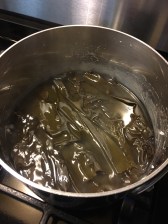
Gently wipe the combo with a damp paper towel. Place in a pot with 4 cups of water. Allow the kombu to soak for 3 hours.Add salt and simmer over gentle heat for about 30 minutes, then discard the kombu.
Raise the heat to medium-high and reduce dash until about 90 percent of the liquid has evaporated, about 60 minutes, scraping down the salty residue from time to time. You should have about 3½ ounces (a scant ½ cup) of sediment with a bit of liquid.
Pour the sediment and liquid into a shallow glass baking dish and place in a 250º oven. The finishing salt is done when the salts crystallize and all the liquid has evaporated. The size of the baking dish will determine how laong evaporation and crystallization take. The larger the dish, the greater the surface area, and the quicker the evaporation. An 8 X 8 bkinf dish took about 90 minutes.
I got the kelp at Whole Foods. Prepared the (broth). The final product on the right took about 2 hours in my oven. I made MSG!
I loved this book from the first sentence, “So here I am, upside down in a woman.” Never did I question the brilliance of an 8 ½ month old fetus as narrator, I only loved his voice, as when he said, “But I don’t whine in the face of good fortune. I knew from the start, when I unwrapped from its cloth of gold my gift of consciousness, that I could have arrived in a worse place in a far worse time.” He explains from whence his knowledge comes: his mother listens to a lot of podcasts, especially during bouts of insomnia. He listens closely to analysis and dissent. He admits that, “In the middle of a long, quiet night, I might give my mother a sharp kick. She’ll wake, become insomniac, reach for the radio. Cruel sport, I know, but we are both better informed by the morning.”
The fetus is quite a wine connoisseur, enjoying it “decanted through a healthy placenta.” He likens his first experience of it to a summer’s breeze. But he is not without caution.”I know that it will lower my intelligence. It lowers everybody’s intelligence. But oh, a joyous, blushful Pinot Noir, or a gooseberried Sauvignon, sets me turning and tumbling across my secret sea, reeling off the walls of my castle, the bouncy castle that is my home.” I couldn’t agree more. About the wine.
There were many literary references that I recognized, and I’m sure, many more that I did not. I had to look up some French and Latin phrases, not because I couldn’t figure out the meaning in context, but because I wanted to know precisely what they meant. There was one I couldn’t find a translation for, “coup de verite,” so I don’t know if McEwan made it up or if it’s just obscure.
One final example of why I love McEwan’s writing. The fetus reviles his uncle, Claud as a dull man, who is constantly whistling jingles and ringtones, and knowledgeable only about which stores to shop for clothes and the kind of cars to drive and “Whose repeated remarks are a witless, thrustless dribble, whose impoverished sentences die like motherless chicks, cheaply fading.”
THE BEAUTY:
Shoreditch, when his father lived there, was a nondesirable part of town. Now, it has undergone gentrification and is fashionable and hip, say s the internet. The images below illustrate its appeal.
timeout.com/image/101841035/630/472/image.jpg
I’m assuming that this photo was taken in the Cereal Killer Cafe that serves more than 120 different kinds of branded cereals. These twins are the owners, Alan and Gary Keery. The photo comes from Time Out London.
This mural by Ben Eine is in the tunnel archway of Rivington Street.
timbishop.co.uk
media-cdn.tripadvisor.com
Are you ever really too old to be hip?
THE FOOD:
After a tense interchange with Trudy (mother of the narrator), Claud was hungry and intent on ordering Indian takeaway, but changed his mind enroute to the phone, and ordered Danish open sandwiches instead. The only Danish restaurant in London according to their website is Snaps & Rye. I learned on their website that cheese Smørrebrød are Danish open-faced sandwiches that are eaten to conclude a meal. Here is my version of one.
Blue Cheese, Pear and Hazelnut Sandwich
Makes 2 sandwiches
INGREDIENTS
2 slice rugbrød (dense Danish sourdough rye bread), about 1/3-inch thick (I substituted a dark, whole grain rye)
1 tsp unsalted butter, softened slightly
½ pear, cut thinly lengthwise
¼ C Danish blue cheese, crumbled
4 tsp toasted hazelnuts, chopped
If not already trimmed, cut rye bread to a 3- by 5-inch rectangle and lightly toast. Spread butter evenly all over top side of bread. Arrange pear slices on bread so that they overlap slightly. Top with crumbled blue cheese and finish with toasted hazelnuts. Serve right away.
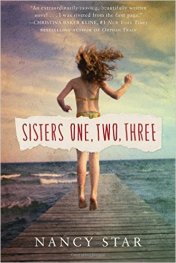
Sisters One, Two, Three is about many things: family, secrets, the unknown effect of our behavior on those who love us, disappointment, and allowing things to happen to us instead of making choices in our lives. It also is a cautionary tale about finding a balance between paying attention to loved ones and being stiflingly overprotective. The Tangle family consists of Glory, the flamboyant, beautiful, and aptly-named mother; Solly, the gracelessly-aging, but dear husband and father; and the children, Ginger, Mimi, Callie, and Charlie. The book was a compelling read and hard to put down. I kept reading another chapter to uncover the secrets and also hoped that some plot points that were troubling me would come together in a way that made sense. Without disclosing the ending, I’ll just say that once revealed, Glory’s secrets didn’t seem plausible to me. There was no reason for them. Finally, that so many people contributed to keeping Glory’s secrets for so long didn’t ring true, either. I enjoyed the book right up until the end.
THE BEAUTY:
Martha’s Vineyard was a large presence in this story. Many of the characters spoke of their love for the place and of how friendly and accepting the people are there. The author made reference to the fact that many of the people who lived there signed, as in American Sign Language. My research revealed that there was indeed, a large population of deaf people in the past. The original founders carried a gene for deafness, and because of the relative isolation of island living, there was a lot of intermarriage, increasing the deaf population. That population has dwindled in modern times because of mobility. Young people now travel off-island for college and work, and tend to marry people from those locations. The connection to the book is that outsiders or minorities, like the deaf, like Callie, can be accepted into the community there. The photo below is a couple of the gingerbread cottages in Wesleyan Grove in Oak Bluffs. This is the site of the first summer religious camp in the country, Martha’s Vineyard Camp Meeting Association. It is a National Historic Landmark. What reminded me of it was the description in the book of the community that all looked out for Callie.
This photo is from a September 7, 2013 entry on svperry.com blog.
THE FOOD:
For Ginger’s 13th birthday dinner, a significant event for the whole family, as well as for Ginger herself, Glory made “Tuna Tempter,” a casserole that she made with wagon wheel pasta and condensed mushroom soup. It reminded me of a dish I made in sixth grade on an environmental camp trip, but ours was called “Tuna Wiggle.” We arrived at camp mid-morning, and after an introductory activity where we were arranged in small groups, those groups then put together a casserole which was cooked over an open fire. At the time, the whole experience, including the finished product, impressed me. I was eleven.
TUNA WIGGLE
12 oz. pkg. egg noodles 2 C frozen peas
2 cans tuna, drained and flaked ½ C grated parmesan cheese
2 cans cream of mushroom soup bread crumbs
1 ¼ C milk butter
Preheat oven to 400º
Undercook noodles (package instructions said 9-11 minutes, I cooked them for 7). Drain. In large mixing bowl, combine noodles, flaked tuna, peas and parmesan. Mix cream of mushroom soup and milk together until smooth. The noodles will absorb the liquid, so you want it watery. Add soup to noodle mixture and stir to mix evenly. Fill a greased 13 X 8 X 3 inch baking dish with noodles mixture. Cover tightly with foil. Place in oven for 15 minutes. Remove dish from oven, remove foil. Sprinkle top with bread crumbs and dot with butter. Return to oven for another 20 minutes. Let the casserole rest for 10 minutes before serving.
The unnamed narrator whom I have cleverly called “N” in my notes, received a call from her mother-in-law, Isabella, with whom she has a frosty relationship. Isabella had been unable to contact her son, Christopher, putting N in the embarassing position of having to admit that she had no idea where he was. Isabella, ever the organizer and meddler, after locating Christopher’s general whereabouts, made all the travel arrangements, and much to her own surprise, N quickly found herself in a luxury hotel in the small fishing village of Gerolimenas in southern Greece, waiting for her husband to return from an excursion. The story is revealed through N’s musings, so the reader perceives things from her most private thoughts. N is a perceptive woman, someone who watches people carefully and empathetically. For example, after watching an encounter between Stefano, her driver, and his girlfriend, Maria, N later notes that impatience is Stefano’s fatal flaw.
The writing reminds me of Ian McEwan in its focus on the inner musings of the main character. The literary references: Lady Macbeth, Colonel Chabert by Balzac, Billy Budd by Melville, all serve to explain situations in the character’s lives efficiently and succinctly. The descriptions of the physical landscape are vivid. I had trouble following the dialogue at times for the lack of quotation marks. Another distraction was the use on every page of em dashes, rendering the sentences long and cumbersome. I had to reread so many sentences, some several times, that the prose lost fluidity. Minor problem compared to my overall enjoyment of the book.
THE BEAUTY:
N stayed in a luxury hotel in a very small fishing village on the Gulf of Messenia on the Peloponnese. While I couldn’t find such a hotel online, I imagined it to look very much like this, which is in Kokkala, just 35 minutes from Girolimenas on the Gulf of Laconia. When I was in Greece in the mid 1980’s, my friend and I were staying near Marathon, north of Athens, visiting a friend of hers. We took a car trip to the Pelopponese, stopping in Epidaurus to see a play in the ancient amphitheater. The theater was part of a complex dedicated to Asklepios, god of medicine (whose symbol was the caduceus). In ancient Greece, a visit to a god’s holy place would have included theater, where catharsis was considered a route to good health. In that spirit, knowing only a few Greek words, the three of us went to see The Persians, a play by Aeschylus, that was part of a trilogy, a form that Aeschylus frequently employed. In The Persians, Xerxes has angered the gods with his expedition against Greece in 480/79 BCE. The drama mainly focused on the defeat of Xerxes’ navy at Salamis. Aeschylus had fought the Persians at Marathon in 490 BCE. Sitting there in the hollow of stones worn down by the weight countless Greeks, both ancient and modern, it was quite a thrill to know that I was touching the same stone that some person had sat on more than 2000 years ago. I listened for the two Greek words I could remember. Parakalo (please) was used several times, but karpouzi (watermelon), not once!
THE FOOD:
N has an uncomfortable dinner in the hotel with one of the staff. N chose pasta and a Greek salad. I went to Greece on my first trip abroad in the mid 1980’s, and was blown away by the delicious food and gorgeous scenery. I still rave, all these years later, about the food. For almost every meal I had tsatsiki and pita, some form of pasta and a Greek salad. I swear you could taste the sunshine in those crisp cucumbers. For awhile, I believed that supermarket tsatsiki was as good as homemade, until a meal at our local Greek restaurant reminded me just how good homemade is, and with readily available, good quality Greek yogurt in the grocery stores, eliminating the time-consuming step of draining regular yogurt (to make it thicker), tsatsiki is easier than ever to make at home.
TSATSIKI
1 medium cucumber, peeled, seeded 1 tsp white vinegar
and finely chopped ½ tsp salt
8 oz Greek yogurt 3 cloves garlic, minced
1 T extra virgin olive oil
Blend all ingredients. Chill at least one hour before serving. Serve with crudite, pita bread or a baguette, or any combiation thereof. A word about the garlic. If you are not a garlic fanatic, you can use less to suit your taste, but the dish does need the garlic seasoning. You can also soften the flavor of raw garlic by warming it in the microwave before mincing. If you leave them in too long, they will cook. If using 3 cloves, try microwaving for 1 minute, as every microwave heats differently. You can adjust the time relative to your microwave.
This book was on my list of books to look for in 2017, although I’m not sure where the recommendation came from. I noted that it was a debut novel, and similar to The Night Circus, a fantasy, which I liked very much. I was immediately drawn into the story which began with an old woman, Dunya, telling a much-repeated tale about the Frost King to a family huddled around the oven for warmth on a cold Russian winter’s night. I loved the Russian names and the brief history lesson about the Golden Horde, and Russia’s subservience to its Tatar overlords in the 13th and 14th centuries. The story is mainly about the Vladimirovich family, headed by boyar (ruling prince) Pyotr. I immediately liked the man when I learned that while his family was warm and entertained in the house, he had spent that same night in the barn birthing a lamb, as was his practice when a new creature came into the fold to enrich his holdings. Although we don’t get to know his wife, Marina, very well, she is a formidable presence throughout the book. I only just realized this as I write about her now. The most interesting character is Vasilisa Petrovna, Pyotr’s youngest daughter. She is a fairy tale heroine worthy of a Disney movie, although, she might be a bit too unorthodox for the squeaky clean franchise. The descriptions of the landscape resonated with me so much, that when I left my reading to take the dog out for a late afternoon walk in the freshly falling snow, I was Vasilisa, bravely navigating the cold, inhospitable forest with all of its wild strangeness, my trusty dog at my side.
The Beauty:
One of the fantastical creatures of Russian fairy tales that inhabits this story is a “rusalka,” a water nymph. I first heard of a rusalka in Bel Canto, an Ann Patchett book about opera. The celebrated soprano in that book sang Rusalka’s song from the Dvorak opera by the same name at a very special event. At the time, I listened to a lot of sopranos singing that song, trying to find the one that I would add to my playlist. Ultimately, I opted for the “voice” of Joshua Bell’s violin. In act one of the opera, Rusalka, the daughter of a water goblin, tells her father she has fallen in love with a human prince whom she’s seen hunting around the lake. She wants to become human to embrace him. Her father thinks its a bad idea, but agrees for her to meet Ježibaba, a witch, for assistance. Rusalka sings her “Song to the Moon,” asking it to tell the prince of her love. Ježibaba tells Rusalka that if she becomes human, she will lose the power of speech and if she is betrayed by the prince, both of them will be eternally damned. Rusalka agrees to the terms and drinks a potion. The prince, hunting a white doe, finds Rusalka, embraces her, and leads her away, as her father and sisters lament. It was beautiful when I first heard it, it is still beautiful now.
The Food:
In an early encounter of Vasya, she has followed her nose into the kitchen because of the the tantalizing smell of honey. Dunya promises her a cake of her own, if only she will tend to her mending while Dunya continues to take them out of the oven to cool. Vasya went to her stool where she noticed a pile of cakes already cooling on the table just out of her reach. They were so inviting, brown on the outside and flecked with ash from the oven. A corner of one cake crumbled, revealing a midsummer-gold interior, and a rising curl of steam. Being just six, and unable to wait, Vasya crept toward the steaming plate and quickly hid three cakes in her linen sleeve before running out the door to Dunya’s cries of protest.
My research led to the following recipe. It doesn’t match the description in the book, but it is a honey cake, and it’s Russian, and it’s delicious, and impressive to serve because of the layers.
Russian Honey Cake
Start the cake a day before you want to serve it because the filling needs to soften the cookies into thin cake layers overnight, just like an icebox cake. You can make the cookie layers a week in advance and store them in a container at room temperature, as you would other cookies.
COOKIE LAYERS
½ C honey 3 large eggs
½ C sugar ¼ tsp fine table salt
½ C unsalted butter 1 tsp vanilla extract
1 tsp baking soda 3½ C all-purpose flour, divided
FROSTING AND FILLING
32 oz sour cream
1 14 oz can sweetened condensed milk
The day before serving:
Preheat the oven to 350º F. Get 2 baking sheets, or 2 round pizza pans. Tear off 6 sheets of parchment paper large enough to make an 9-inch circle on them.
To make the cookie dough:
In a medium saucepan, combine the sugar, honey and butter over medium heat. Once simmering, cook for 3 to 4 minutes until it gets a faint shade darker and you can smell the honey. Whisk in baking soda.The batter will foam up. Remove pan from the heat and set aside for 2 to 3 minutes. It won’t significantly cool off, just settle a little. Lightly beat the 3 eggs in a spouted measuring cup for easiest pouring. Whisk the honey mixture vigorously in the pot the whole time while drizzling the thinnest stream, a half teaspoon at a time, of the eggs into the honey mixture. Do not stop mixing. Continue until all of the eggs are thoroughly whisked in. With a spoon, stir in the salt and vanilla and 3 cups of flour. The dough is going to be thick like a bread. Stir in the last ½ cup of flour ¼ cup at a time.
Shape and bake the cookies:
Lightly flour your counter and divide the still warm dough into 8 even pieces. Roll the first piece between two sheets of parchment paper (no flouring needed) to a slightly bigger than 9-inch round. Remove the top sheet of parchment paper. Very lightly dust the top with flour if you’re going to put something on it (such as the bottom of an 9-inch cake pan) to trim the shape to an even 9-inch circle. Put the trimmings on one of the sheets of parchment paper (it’s fine if they overlap a little) to bake after all 8 layers have been made. If you have trouble rolling the dough into 9 inch rounds, 8 inches will be fine, but you may need to leave it in the oven longer. Just make sure that all your rounds are the same size. Dock the circle of dough all over with a fork. Slide your 9-inch round onto a baking sheet and bake for 6 to 7 minutes; it should feel firmish and get slightly darker at the edges. Slide the cookie onto a cooling rack. Meanwhile, while the first layer is baking, roll out your second piece so it’s ready to go into the oven as soon as the first comes out. If you’re making good time, get the third ready too and continue to bake them two at a time. Keep adding the unbaked cookie trimmings onto one piece of parchment paper. Keep repeating this process until all 8 layers are baked. Finally, take that last sheet of parchment with all of the cookie scraps on it and slide it onto a baking sheet and bake it, checking in at 4 minutes, because the thinnest scraps will want to burn quickly. By 5 minutes, all should be baked until pale golden. Let cool completely and save until you’re ready to decorate the cake.
Fill and frost the cake:
Whisk the sour cream and sweetened condensed milk together in a large bowl. Once cookies are cool, place a dab of the sour cream mixture on your cake plate and place the first cookie on top of it to help adhere it. Cut or tear one of your used pieces of parchment paper into strips and tuck them all around the underside of the cake to protect your cake plate. Do not eliminate this step. Scoop 3/4 cup sour cream mixture onto the center of your first cookie layer. Spread it only a little from the center, leaving a good 1- to 2-inch margin of unfrosted cookie. Stack the second cookie on top and repeat until you have 8 layers. This will quickly become a huge mess. The sour cream is going to spill out and down the sides anyway. It’s also going to want to slide around and not stay neatly stacked. It’s totally okay because the filling will thicken as it absorbs into the cookies. Put the cake in the fridge for a couple hours (1 to 3) and when you come back to it, nudge the stack gently back into place and use a spoon and icing spatula to scoop the spilled-out filling back up the sides and onto the top of the cake. Don’t worry about it looking neat. Let it chill overnight.
The next day, finish the cake:
Grind your baked, reserved cookie scraps in a blender or food processor, or bash them into crumbs in a bag with a rolling pin. Take your cake out and do one final frosting clean-up. Spread any newly puddled sour cream back up the sides and across the top. If you’d like to make a decoration on top of your cake, take one of those used pieces of parchment paper and cut a stencil with it. Place it gently on top of the cake. Use a small spoon to sprinkle the top and sides of the cake with the crumbs. Remove the stencil and parchment paper strips to reveal the clean serving plate. The cake can be served right away, or kept in the refridgerator for up to 5 days. Dip a knife in hot water to make clean slices.
A bunch of extra dough and cake layer tips:
• Ovens will vary, especially for such thin cookies, so keep an eye on the first round as of the 6-minute mark, checking in each minute after as it can brown very quickly, and then you’ll know how much time you need for the remaining ones.
• This dough is easiest to roll when it’s still a little warm. If yours cools quickly, put each piece in the microwave for 5 to 7 seconds to get it a touch warmer again, without prematurely baking the cookie.
• Save all of those used pieces of parchment paper for the next step and beyond.
It was a fair amount of work, but the end product is impressive and delicious.
Florence is a seventy-five year-old feminist icon, writer, public speaker, truth-teller, New Yorker, curmudgeon. While there was much about Florence that would make me hesitate to welcome her into my circle of friends, I truly loved her honesty. On one outing with her granddaughter, there was an incident in a Duane Reade, the ubiquitous pharmacy chain in Manhattan. When I read it, I mentally cheered, “Good for you, Florence, you’re right!” I won’t describe it in detail for those readers who haven’t read the book yet, but it was something that could happen anywhere, and does, more frequently than it probably should. Most of us, myself included, allow our advantage to be taken in public places in order to avoid confrontation. Suffice to say, Florence Gordon never shies away from confrontation. For me, that was the charm of this book. I experienced vicarious pleasure every time Florence was true to herself. At one point I wondered, “If Florence were a friend of mine, would I survive one of her frank assessments of my behavior, character, or whatever else she chose to comment upon? Would her observation be so hurtful that I’d withdraw into a paralyzing depression, or would I recognize the truth of her remarks, suck it up, and grow from the experience?” I’ve decided that it’s just too scary a scenario to ponder. But then, I’m safe because Florence, while vivid, is just a fictional character.
The Beauty:
Bruce Morton has crafted a fully-realized, uniquely interesting character in Florence. In addition, while not a comic book in the laugh-out-loud vein, his writing is witty and enormously entertaining. Hopefully, this out-of-context example will sufficiently illustrate my point. To appease her ex-husband, Saul, who had been bugging her about getting together, she planned a lunch with him, but on a day when she had an already scheduled doctor’s appointment, so she could get them both out of the way at once. Joining him at the table in the coffee shop where he was already seated, she made the following observation:
“Saul looked unhealthy-but he always looked unhealthy these days. He was wearing a white shirt and a dark sport jacket-everything was clean and respectable-yet somehow he had the air of a man who was going to seed. He was the kind of person who doesn’t smell bad, as far as you can tell, but who looks like he smells bad.”
The beauty of the writing is that all these weeks later as I write this entry, I remember so many details, that I could have written a classic middle school summary without ever needing to refer back to the book. But thankfully, I have spared you that, and instead recommend this book with unreserved enthusiasm.
The Food:
After a panel discussion at Town Hall on the “Revolutions of 1989” on its 20th anniversary, Florence, who had been on the panel, joined two old friends, her daughter-in-law and granddaughter, all of whom had attended the discussion, at a restaurant. After the four adults tucked into a second pitcher of sangria, the talk turned to the amount of time people spend on their devices. It was during this discussion that Florence made her point in a typical Florence move. The sangria recipe here, celebrates and commemorates that moment in the restaurant.
Sangria
1 L bottle of Carlo Rossi sangria jug wine
1 C brandy
⅓ C Triple Sec
1 C orange juice
ginger ale
slices of orange, lemon, lime, apple and peach
Mix all ingredients and refrigerate overnight. To serve, pour into a tall glass with plenty of ice anf float ginger ale on top.
 This is my least favorite cover of the year so far, but not my least favorite book. This was one of those reads that was hard to put down. A mystery, Bohjalian managed to baffle me so that until the very end, I did not know how the mystery would be resolved. Having been disappointed by the endings of a couple of books I have read recently, this was a most satisfying conclusion. I would love to see how Bohjalian maps his plots, because the details here add up to a narrative that is completely believable, and even though, as the reader, I’ve had most of the information necessary to solve the mystery all along, I was surprised by the ending. In a positive way. We know from the start that Annalee Ahlberg went missing from her home while her husband, Warren, a professor at a local college, was at a poetry conference in Iowa City, and her two daughters, Lianna and Paige, were asleep in their rooms, not far from her bedroom. We know that Annalee suffered from somnambulism, but since spending time at a sleep clinic years before, had not had any recent episodes. I believed at various times throughout the book that a couple of completely innocent characters (I later found out) were up to no good. As one can imagine, having been in the house at the time of her disappearance, both daughters felt guilt and remorse for not waking up that night and saving their mother. The worst part for everyone involved was not knowing where she was, what happened to her.
 It’s no secret that I love the writing of Alexander McCall Smith. Having begun with the No. 1 Ladies’ Detective Agency series; I moved on to Portuguese Irregular Verbs, the Professor Dr. von Igelfeld series; then the Sunday Philosophy Club series with Isabel Dalhousie and company. But my favorite of all is the 44 Scotland Street series, of which this book is the most recent addition. I love the cultural reflections, the digressions and ruminations about friends and loyalty and topics in the day’s current events. I love the way the characters love Edinburgh and Scotland and each other. I also love the way each book ends in a poem by Angus Lordie. The poems celebrate the uniqueness of Edinburgh and the common culture shared by the group of friends gathered around Domenica and Angus’s dinner table. The last stanza of the current one: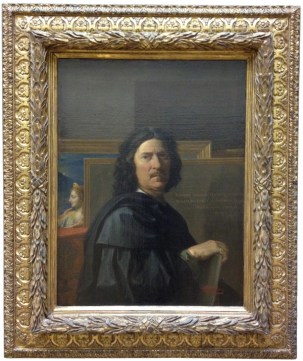

 I wish I could remember where I got the recommendation for this book, so that I can file for future reference that it is a source I should pay attention to. I loved the book. I hope that the fact that it is categorized as a Young Adult book will not put some off from reading it. It packs a very powerful emotional punch, worthy of any “adult” reading. In the author’s note, Patrick Ness explains that he was asked to take on the writing of an idea by Siobhan Dowd, who died before she was able to complete the work. All he had was the characters, a premise, and a beginning. He was an admirer of her previous books, but had not met her. I think it was very brave of him to take this on, and can’t imagine that it could have been any better in any other writer’s hands. Consequently, I have put both Patrick Ness and Siobhan Dowd of my list of authors to read. This is a terrific story.
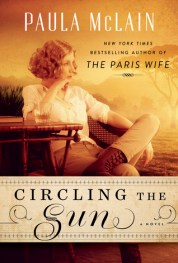 Beryl Markham was a woman who chose her own path in life, often acting outside of the social norms of the time, leaving her frequently alone and friendless, and bringing truth to the phrase “well-behaved women seldom make history.” She was the first female licensed horse trainer in Africa, the first woman to fly solo across the Atlantic from east to west, an adventurer and author. Her path frequently crossed that of Karen von Blixen, who was 17 years her senior. Beryl played a very small role in Blixen’s memoir
  This is a fire skink, a reptile that lives in tropical forests in Western Africa. They love to burrow and hide and are relatively shy and reclusive, but can become tame in captivity, although not in this house!
 This lovely creature is a vervet monkey, groups of which have been studied in an attempt to understand certain genetic and social behaviors of humans.They have been noted for having human-like characteristics, like hypertension, anxiety, and social and dependent alcohol use. When I saw that sweet face, I had to include it here.
 Next comes a hyrax, a small, thickset, herbivorous mammal. Hyraxes are sometimes described as being the closest living relative to the elephant, because their incisors are tusk-like, but this is currently a matter for debate. From this angle he looks harmless, but head on, his continuously growing incisors look menacing.
 The last animal is a foam-nest tree frog. It lives in subtropical or tropical dry forests and dry savanna. In the dry habitats the seasonal rains prompt the females to come together with sometimes multiple males. They will mate and at the same time create a large frothy nest by thrashing their hind legs. This overhangs a pool of water that the tadpoles can drop into.
 This escargot dish is by Revol. It made serving much nicer.
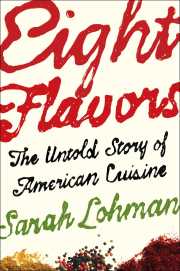 What do you get when you combine American history, food and an engaging writing style?



 I loved this book from the first sentence, “So here I am, upside down in a woman.” Never did I question the brilliance of an 8 ½ month old fetus as narrator, I only loved his voice, as when he said, “But I don’t whine in the face of good fortune. I knew from the start, when I unwrapped from its cloth of gold my gift of consciousness, that I could have arrived in a worse place in a far worse time.” He explains from whence his knowledge comes: his mother listens to a lot of podcasts, especially during bouts of insomnia. He listens closely to analysis and dissent. He admits that, “In the middle of a long, quiet night, I might give my mother a sharp kick. She’ll wake, become insomniac, reach for the radio. Cruel sport, I know, but we are both better informed by the morning.”
 timeout.com/image/101841035/630/472/image.jpg
 media-cdn.tripadvisor.com
 This photo is from a September 7, 2013 entry on svperry.com blog.
 The unnamed narrator whom I have cleverly called “N” in my notes, received a call from her mother-in-law, Isabella, with whom she has a frosty relationship. Isabella had been unable to contact her son, Christopher, putting N in the embarassing position of having to admit that she had no idea where he was. Isabella, ever the organizer and meddler, after locating Christopher’s general whereabouts, made all the travel arrangements, and much to her own surprise, N quickly found herself in a luxury hotel in the small fishing village of Gerolimenas in southern Greece, waiting for her husband to return from an excursion. The story is revealed through N’s musings, so the reader perceives things from her most private thoughts. N is a perceptive woman, someone who watches people carefully and empathetically. For example, after watching an encounter between Stefano, her driver, and his girlfriend, Maria, N later notes that impatience is Stefano’s fatal flaw.
 This book was on my list of books to look for in 2017, although I’m not sure where the recommendation came from. I noted that it was a debut novel, and similar to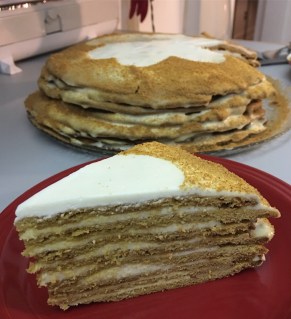
 Florence is a seventy-five year-old feminist icon, writer, public speaker, truth-teller, New Yorker, curmudgeon. While there was much about Florence that would make me hesitate to welcome her into my circle of friends, I truly loved her honesty. On one outing with her granddaughter, there was an incident in a Duane Reade, the ubiquitous pharmacy chain in Manhattan. When I read it, I mentally cheered, “Good for you, Florence, you’re right!” I won’t describe it in detail for those readers who haven’t read the book yet, but it was something that could happen anywhere, and does, more frequently than it probably should. Most of us, myself included, allow our advantage to be taken in public places in order to avoid confrontation. Suffice to say, Florence Gordon never shies away from confrontation. For me, that was the charm of this book. I experienced vicarious pleasure every time Florence was true to herself. At one point I wondered, “If Florence were a friend of mine, would I survive one of her frank assessments of my behavior, character, or whatever else she chose to comment upon? Would her observation be so hurtful that I’d withdraw into a paralyzing depression, or would I recognize the truth of her remarks, suck it up, and grow from the experience?” I’ve decided that it’s just too scary a scenario to ponder. But then, I’m safe because Florence, while vivid, is just a fictional character.
 bbfbooksbeautyfood