THE BOOK:
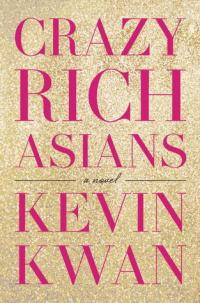 Rachel and Nick are an ordinary (if living comfortably in New York City is ever normal) couple. Two years into their relationship, never having shared anything about his family, Nick invited Rachel to attend his best friend’s wedding and spend the summer in Singapore, which would, of course involve meeting his family- who are: CRAZY RICH ASIANS. This is another version of the “haves and the have-nots;” about who we are better than and who we suppress without ever really examining what makes a person worthwhile. Your clothes are better than mine. Does that make you better than me in any meaningful way?
Nick and Rachel are equally good people, but Nick’s family, believing that wealth must insulate them from ordinary people, throws up a roadblock to sabotage their relationship. We have all aspired to wealth at some point in our lives. As Tevye said in Fiddler on the Roof, “Would it spoil some vast eternal plan if I were wealthy man?”
It’s a fun, funny, and entertaining book. The movie has just opened and I can’t wait to see it.
THE BEAUTY: The pictures of Singapore are stunning. This one from CNN.com shows the Marina Bay Sands luxury hotel in the background. The spaceship-like structure on top connecting the three buildings is the Skypark, with an infinity pool, garden walk, and restaurants 57 stories above street level. In the foreground is the Esplanade-Theater of the Bay along the waterfront.

THE FOOD: According to this book, every Singaporean has an opinion about where to get the best satay, and differences of opinion can lead to heated debates. As Rachel explained to her mother, “Let them be, Mom. Let them be. This is just how they all are.”
Singapore Satay
serves 4
1 large red onion, chopped
2 large garlic cloves, chopped
3 stalks lemon grass, chopped
1 T peanut oil
1 T ground turmeric
1½ tsp brown sugar
1 tsp ground cumin
1 tsp ground ginger
salt and black pepper to taste
1 lb skinless, boneless chicken breast halves – pounded thin
12 wooden or bamboo skewers
In a large nonreactive bowl, stir together the onion, garlic, lemon grass, soy sauce, peanut oil, turmeric, brown sugar, cumin, ginger, salt, and pepper. Reserve about 2 tablespoons of marinade in a small bowl, and refrigerate until cooking time. Mix the chicken breasts into the remaining marinade, stir to coat well, and marinate in refrigerator overnight.
About 30 minutes before serving, soak the skewers in water. Preheat an outdoor grill for high heat, and lightly oil the grate, or cook on a stovetop griddle, getting the griddle very hot before spraying with cooking spray.
Remove the chicken breasts from the bowl, and discard the used marinade. Cut each chicken breast on the diagonal into 6 long strips, and thread a chicken strip onto one of the soaked skewers. Grill the skewers on the grill, turning frequently and basting with the reserved marinade, until the chicken is cooked through with brown, crispy edges, 5 to 8 minutes per skewer. On the stovetop, turn the heat down to medium-low when you put the skewers on the griddle, cooking low and slow until the chicken is cooked through, but not overcooked, 5-8 minutes per skewer.

The marinade was delicious, not too spicy. Serve with your favorite dipping sauce, soy sauce or Sriracha. (When it rains, we grill inside.) Because I’d never made satay before, this was a fun one for me. I don’t think I pounded the chicken enough, so be careful to pound your chicken evenly and thinly.
 I had never read Elizabeth Berg, but a friend has read a lot of her, so I was hoping that I would like this book. I did! Like
 Sometimes I really struggle with a book, and yet I persist, for whatever reason- in this case, because the reviews were so consistently positive. And sometimes, I’m rewarded with something beautiful, something that puts everything that I struggled with before in context, and my feelings do a 180º, and I love the book. This happened on page 252. I don’t care how long it takes to get there, as long as I get there.
 Another debut novel, this one grew from an article in a 1939 women’s magazine that Pearce happened upon. Emmeline Lake and her best friend, Bunty, were working girls in 1940’s London. Emmy dreamed of becoming a war correspondent, while Bunty worked in the War Office. When Emmy spotted an ad for a Junior at Launceston Press, she believed this to be her ticket to a correspondent’s life. Reality, of course, finds her doing clerical work, eventually typing Mrs. Bird’s responses to her advice column. Mrs. Bird was a very traditional woman and makes it clear that some subjects will not be addressed in her column, some of which are: marital relations, premarital relations, extramarital relations, physical relations, sexual relations, illegal activities… and on and on. As Emmy read more and more of the letters, she began to feel sorry for the letter writers, and at first, tried to subtly urge Mrs. Bird to extend a few words of kindness and encouragement. But Mrs. Bird had her rules and would not yield: nose “to the grindstone” and all that. She gave no thought to the living conditions in London during the Blitz. Daily raids and bombings were the norm, absolutely everyone had someone they knew and loved in the fight, women were doing jobs that the men had done before they were taken into service, in short, times were difficult and everyone, whether they knew it or not, was looking for comfort, however small. Without saying more, I think you can figure out where the story headed. A key event in the book was based on a historical fact. The Cafe de Paris was night club made popular by the Prince of Wales. On March 8, 1941, it was bombed by the Nazis, killing 34, injuring 80. Ken Snakehips Johnson, a bandleader, was one of the 34. More on him later.


 I picked up three books from the library the other day when I was already in the middle of a book I had bought, but when I was ready for the next book, this was the one. What a treat! A debut novel, it sets a high bar for Nova Jacobs’ future work. Once I started reading, I blew off all other activities on a beautiful summer day and read the whole thing in one sitting. It is a mystery that starts with the apparent suicide of Isaac Severy, a renowned mathematician, and professor at the Sloan Laboratory of Mathematics and Physics at California Institute of Technology. As the family gathers for his funeral, we learn that one of them received a letter from Isaac written the day before his death, the first of many secrets to be revealed. We quickly learn that the equation is so very valuable, extreme measures must be taken to protect it. There were twists and turns, and things I didn’t figure out, but the characters were compelling and the family drama felt real. There’s even a transgender character. Well done, Nova Jacobs.

 bbfbooksbeautyfood