THE BOOK:
 If I hadn’t already seen Trevor Noah on “The Daily Show, and laughed at his wit and marvelled at his intelligence, I probably wouldn’t have noticed this book, other than it being the selection for my book group this month. This is a series of essays that together form a jagged picture of a life, forged in circumstances that are so foreign to me, this was a real eye-opener. The title refers to the fact that when the author was born, it was against the law for people of mixed races to be together, and a crime for bearing children as a result of such a union. Had he not been carefully sequestered as a young boy, he might have been taken away from his parents. Astounding, but made very real by the anecdotes Noah related in the book. His father was Swiss, and white and laid back. His mother was Xhosa, and black, and defiant and rebellious. Because he was born under apartheid in South Africa, his story illuminates what life was like to be colored in a racially charged and oppressive environment.
Noah explained that apartheid, perfect racism, started with the Dutch in 1652 in Cape Town when the colonists warred with the natives, and developed a set of laws to enslave them. When the British took over, the descendants of the original Dutch settlers moved inland and became the white tribe of Africa, the Afrikaners. Then the British empire fell, and back come the Afrikaners to claim their inheritance. To control the black majority, the government knew they needed newer tools. “They set up a formal commission to go out and study institutionalized racism all over the world. They went to Australia. They went to the Netherlands. They went to America. They saw what worked, what didn’t. They came back and published a report, and the government used that knowledge to build the most advanced system of racial oppression known to man.” I don’t know what about this shocked me so much. Perhaps the fact that a more studied and systematic approach to oppressing a particular group of people implies the deliberateness of the effort. It wasn’t like, things just happened, and suddenly, “oh, my goodness, what have we created? We didn’t mean for this to happen!” This was a deliberate, conscious, ruthless undertaking. And yet, people survived. Trevor Noah survived. His mother, his friends, his family, survived.
In the same way that Barbara Lynch’s memoir Out of Line taught me about what it was like going to school during busing in South Boston, this book taught me about growing up black under apartheid in South Africa. I am so glad I read this, and now how even more respect for Trevor Noah and his indestructible mother.
THE BEAUTY: When people have no legal options, they still have to survive, so they do what they have to to feed themselves and their families. There weren’t enough jobs for blacks and coloreds, and the government made no provisions for people who were out of work, so it stands to reason that the threat of being arrested was a daily possibility. The beauty of the people who survived apartheid and came through on the other side, was their resilience and ingenuity. Trevor, had nothing to recommend him in high school, he wasn’t cool and he was poor. But he was fast on his feet, in part from learning to run away from situations that could potentially land him in trouble. So at school, when the bell rang for lunch, Trevor was always the first in line. After a while, he learned to leverage that ability to his advantage. Those who were slower to get to the truck, had less time to eat their food, so Trevor began buying their lunches each day in return for a cash tip. He built up quite a business, and was able to upgrade the equipment he used to make pirated cd’s of American hiphop music, selling to his customers at both at school and in the neighborhood. The business grew and grew, and was the start of his later success that placed him behing the desk at The Daily Show.
THE FOOD:
 Trevor’s father was a presence in his life, even though he couldn’t live with him and his mother, until Patricia married Abel. Then Robert moved to Cape Town and they grew apart, mainly because of the geographical distance. When Patricia hounded Trevor to go find his father, because she believed he couldn’t truly become the man he’s supposed to be without knowing him, Trevor does. On that first meeting reuniting them, even though he was a young adult at the time, his father prepared his favorite meal from childhood, rösti with meat and gravy. Don’t be intimidated by the length of the directions. After you grate the potatoes, it’s really easy, and the resulting rösti is so deliciously crispy, it’s worth it.
Crisp Rösti Potatoes
Yield: one 8-inch potato pancake or three to four 4-inch ones.
1 lb potatoes (Yukon Golds or russets are best)
1½ tsp salt
Generous ¼ tsp freshly ground black pepper
3 T vegetable or olive oil for frying; more as needed
Peel the potatoes and grate them, using the large holes of a hand grater or a food processor. Put the potatoes in a large bowl, add the salt and pepper, and toss to coat thoroughly. Let the potatoes rest for at least 5 minutes, and then, working with a fistful at a time, squeeze as much liquid as possible out of them and transfer to a second bowl. (The potatoes will start to discolor, but that won’t really affect the final results.)
Large holes mean faster work, better texture. A very finely grated potato could turn
mushy during cooking. To make one large rösti—Heat a heavy-based skillet that
measures about 8 inches across the base over medium-high heat. Add the oil (it should come to a depth of about ⅛ inch; add more if necessary.) When the oil begins to ripple slightly, test it by dropping in a potato shred—it should sizzle
enthusiastically. If not, wait a few more seconds. When the temperature is right, take a fistful of potatoes, wring it out once more, and let it fall loosely from your fingers into the center of the pan. (Be careful because the oil will spatter; getting hit by a few tiny droplets is inevitable.) Fill the pan gradually. Adding just a small amount at a time makes it easier to get an even layer. Working quickly, repeat until you’ve got enough potatoes in the pan to cover the bottom. With a fork, gently spread out the shreds of potato to make a layer about ½ inch thick, trying to distribute them evenly, avoiding dense or thin patches. If there are straggly potatoes around the edges, tuck them in with the fork also so they don’t burn. Adjust the heat so that you hear a lively sizzle but the bottom isn’t browning too rapidly. Cook until the underside is a deep golden brown and the potatoes on the top are starting to look translucent, 12 to 16 minutes.
To turn the pancake, carefully slide the rösti out of the pan onto a dinner plate and return the pan to the heat. Put another plate on top of the rösti and, holding tightly, flip the plates over. Slide the inverted rösti back into the pan and continue cooking until the new bottom is browned and the potatoes feel really tender in the middle when poked with a knife, another 6 to 8 minutes.
Slide the rösti onto a cutting board. Blot the top with a paper towel to remove any excess oil. Cut into wedges and serve as soon as possible.
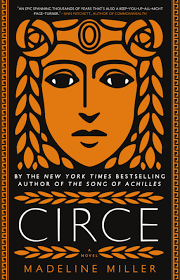 Having taught ancient Greece to eager (kidding) sixth graders, I have had an interest in Greek mythology for quite some time. I remember reading Greek myths as a child, but more vividly as a teacher, I remember an oversized book with a bright yellow cover called
 Grotto photo from ponzaviaggi.com
 Circe had her hands full with her son, Telegonus when he was, literally, a wild child, but he grew up to be a thoughtful and wise young man, who had a passion for adventure. After not speaking to one another for several days, Circe finally relented, allowing him to pursue his passion, even risking a showdown with one of the more powerful Olympians to secure her son’s safety. The night before he was to embark on his journey, she prepared his favorite meal: fish stuffed with roasted herbs and cheese. Not much to go on, but I had to eliminate all the recipes I found that had tomatoes in them, because the ancient Greeks didn’t have tomatoes. But they did have cheese, so I’m thinking feta. This recipe, simple as it is, fits the description as much as it can all these centuries later, and is really delicious.
 I was loving this book and saved the last 50 or so pages so that I could approach the ending with a fresh view and savor it when I had an uninterrupted hour to finish it. Now, two days later, I’m still trying to figure out the ending. (BTW- I had figured out the third thing about Elsie by page 40, so that wasn’t what I didn’t get.) I’ve been skimming the book looking for clues to explain the things I didn’t feel were revealed by the ending. If the third thing about Elsie was the big reveal, then I get it, done! But Florence says, “I never did tell anyone my secret. It’s strange, because I told them everything else. I just couldn’t tell this. In those days, you couldn’t say a word, and then it became too late. Elsie had found her Albert, and I had to use up the remnants of other people’s lives to decorate my own. I didn’t mind so much, as long as we could be friends. As long as she didn’t leave me. It’s strange, isn’t it? How love paper-aeroplanes where it pleases. I have found that it settles in the most unlikely of places, and once it has, you are left with the burden of where it has landed for the rest of your life.” I think I understand now. But to share it, would be to spoil it for you. How I wish I could talk to you after you read it. To see if we agree, and to ask you, “Who bought the brooch?”
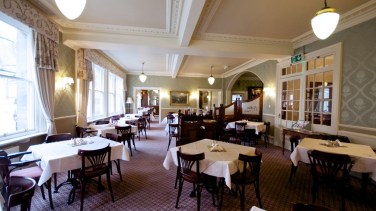


 I wish I had taken a picture of the pink and plain batters in the pan before putting it in the oven, because it was cool looking, but I was pretty covered with batter at that point, as was every counter space in the kitchen. I’m a very messy baker, but a pretty neat cook.
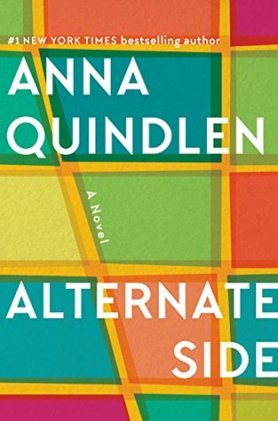 On the very first page, Manhattan makes an appearance as Nora recalls the crowded Village bar where she met her husband, Charlie, twenty-five years before. From then on, New York City is a powerful presence on nearly every page. Nora had one ambition after college, and that was to live in New York. Her husband, Charlie, however, was more of a country mouse, providing there was a golf course. So Nora was living her dream in a Queen Anne style townhouse on the upper east side on one of the very few dead end streets in New York. A little bit of research led me to an article in Curbed New York called “20 of NYC’s Shortest Streets, Mapped,” where I found #16, Henderson Place between east 86th and 87th. “Henderson Place is a charming cul-de-sac that many New Yorkers have probably never heard of.” Only it wasn’t the actual dream she’d had in college, when spending a weekend at her friend’s parents 5th Ave. apartment. “… and she recalled how, entering Missy’s parents’ duplex from an elevator that opened directly into it, she had seen the living room with its pale yellow sofas and apple-green drapes, Central Park a decorative accent through the enormous windows, and thought, This is what it is like to live in New York.” I, too, have a fantasy of having a penthouse in New York, and I, too, will never realize it. But, I did have the same experience as Nora, years ago, in New York with friends, when my husband and I were included in a dinner invitation to their cousin’s penthouse on 5th Ave. The elevator opened right into their foyer, with the living room and grand view of Central Park behind. We were treated to delicious Chinese take-out and bottles of Veuve Clicquot. He was such a gracious and interesting host! The restaurant was called Our Place China Chalet on E. 79th St. We liked the food so much, we kept going there on subsequent NY trips. Jim remembers having Szechuan eggplant for the first time at the penthouse. He loved it, researched a recipe, and it’s now a staple in our house in the summer when the Japanese eggplant are harvested from the garden.
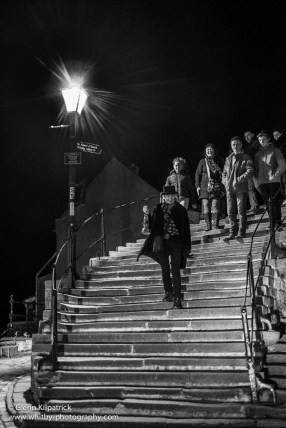
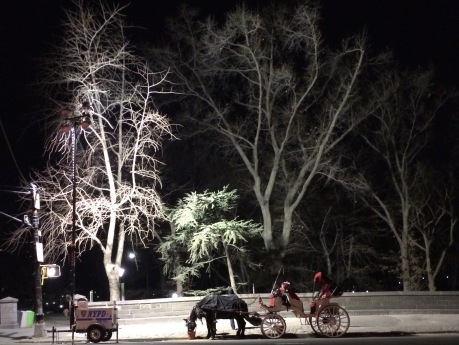 New York, of course. You either love it or hate it. What is there to love? The energy, the movement, the pace, the bustle – all of that hits you in the face the moment you step out into the street. Learning to walk the sidewalks and not look like a tourist takes some observation and concentration, but when mastered, you feel like you belong. I love the corner bodegas where flowers are sold all year, and we always buy a bunch for the room. The ubiquitous Duane Reade, where in the one on 8th Ave. we saw the unofficial mayor of New York, Fran Lebowitz, on the arm of a very handsome, very tall young man. And of course, the obvious reason to love New York is Broadway! There is no other theater (well, London’s west end is pretty good) but Broadway. And that leads me to the image above, taken on our return walk to the hotel after seeing Side Show at the St. James Theater on New Year’s day a couple of years ago. Aaah, Central Park at night.
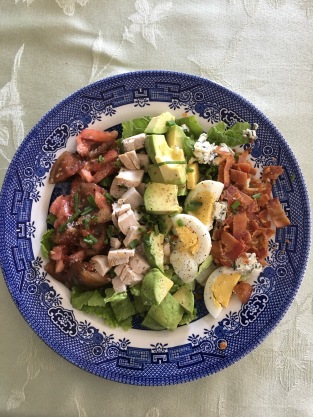 At a work luncheon where unknown to Nora, her career path was about to change, Cobb salad was served. “When did Cobb salad become the official lunch food of New York City women?” When, indeed?
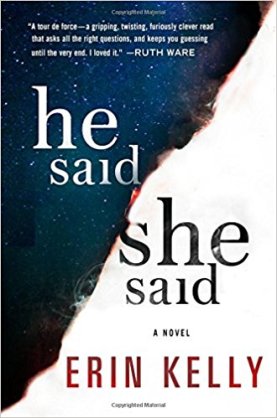 No matter how painful it is, if a relationship is going to survive the long haul, truth must be told from the start. This is the story of lies concealed over time, lies that festered and grew, until protecting them became the raison d’ etre.
 An onlooker watches an annular solar eclipse from New Mexico. Photograph by Colleen Pinski, National Geographic Your Shot.
 The way this book is constructed is a marvel. It rambles like stream of consciousness writing, then catches itself, while the narrator, in whose head we reside for the duration of the book, reminds us that she has digressed, and brings it all around to where she originally left off, having shared some facet of her personality that illuminated who she is. Although it doesn’t sound like it, the book follows a linear track as the narrative goes back and forth in time, with her memories, to flesh out the details of her life, helping the reader understand, and ultimately empathize with her.
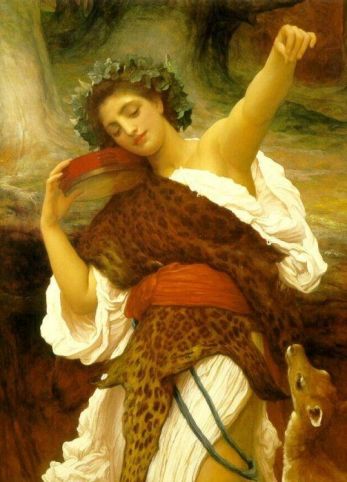 In addition to being a self-taught “learned person,” Aaliyah was also a student of classical music, and mentions many of her favorite pieces as she makes her way through the local record store, 2 records per month – all that her limited budget will allow despite her obsession. So I thought about using either Lizt’s Etudes or Chopin’s Ballade #1 in G minor, but I kept thinking about a scene she described from the Israeli siege of Beirut in 1982. Three Israelis in combat fatigues broke into her apartment in the pre-dawn hours. She grabbed the AK-47 that was on the bed beside her (don’t ask, read the book, it’s a good story) and without having to fire a single shot, sent those 3 intruders scrambling out of her apartment and into the street. Needless to say, her reputation in the neighborhood as a “crazy lady” went a long way in the future toward keeping her safe. But the image of crazy ladies reminded her of the Maenads, the female followers of Dionysus (Bacchus is Roman mythology) whose name translates as “raving ones.” They reached a frenzied state with the help of dancing and intoxication. When I searched the web for images of Maenads, this picture by Frederick Leighton, called “Bacchante,” came up. Unfortunately, the caption said that it was in a private colection, making the original inaccessible to me, although there was a link to purchase a print. I just love this picture. Not sure why. Wildness? A girl and her greyhound – goat – sheep? I don’t know. I just can’t stop looking at it.
 My husband likes dried cherries, so I added them, warmed the pudding and drizzled it with honey.
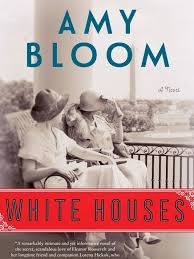 I heard an interview on a podcast, probably Just the Right Book, with the author, Amy Bloom. She said she relied heavily on Eleanor Roosevelt’s correspondence in crafting her fictional account of Eleanor’s relationship with Lorena Hickok. Perhaps that is why the dialogue rings true, Eleanor’s remarks more than Lorena’s. Eleanor was a much more accessible character than Lorena in this book. She comes across as vaguely saintly without ever a hint of “poor me,” although if what I’ve read here and in other books is true, Sara Delano Roosevelt, Eleanor’s mother-in-law, was a force of nature, like a tornado or a hurricane or blizzard, or some other natural destructive event. The collateral damage she effected was Eleanor’s relationships with her children. The children were always jockeying for their father’s love and approval, while oblivious to their mother’s unconditional love. It was Sara who had created the environment in which Franklin was the sun, moon and stars, and Eleanor was, just there. While the book is about Eleanor and Lorena, the main character really was Franklin. A selfish, egotistical man with a wandering eye, everyone, whether they loved or loathed him, was taken in by his charm, personality and drive. It was Franklin who made things happen, who could rally the troops, reassure a frightened citizenry that all would be well in the end. People were drawn into his vortex whether they intended to or not. Franklin was yang to Eleanor’s yin, opposites that more often than not, functioned as a cohesive whole: Franklin’s energy to Eleanor’s reflectiveness. The fact that I’ve said very little so far about Lorena is idicative of the book. In the first half where we learn of Lorena’s childhood struggles and eventual departure from her home, Lorena is a fully realized person, but as the book moves on toward the end, Lorena becomes a more shadowy figure, a hanger-on, who I really didn’t much care about.

 Selin is a college freshman, longing to be a writer, longing to find her way. Along the way, she fell in love. Perhaps love, although at times it seemed more like infatuation, or obsession. Ivan, the object of her desire, was kind of a free spirit, and I wondered throughout the book what he really wanted from this relationship with her. She sought a summer internship in Hungary at his suggestion. She was to teach English in small villages near Szentendre. Although Hungary was Ivan’s home, he only planned to be there briefly that summer, before traveling to Thailand. When Ivan drove Selin back to the campground in Szentendre after spending a couple of days with him, they said their goodbyes, and Ivan went on his way, leaving Selin reluctant to rejoin her group, needing some alone time to compose herself after his departure. She tried call her friend Svetlana, but was told, “All the lines to that country are busy,” so she called her mother, telling her that Ivan had left for Thailand. Her mother understood just how Selin felt, and told her to go see some beautiful things. Beauty encouraged the production of of endorphins, which helped make you feel better and prevented inflammation. This completely encapsulates how I feel about beauty, and why I, too spend time searching for it wherever I am. Perfect comment for this blog.
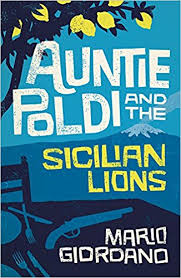 Auntie Poldi was at a crossroads in her life at 60, looking for a home. She decided to leave Munich to settle in Sicily near her late husband’s family. She enlisted Martino, her sister-in-law, Teresa’s, husband, to drive her around looking for the perfect property. Being an intuitive type, she couldn’t define exactly what she was looking for, she only knew that when she felt the energy of the right place, she’d know it. And it needed a sea view.


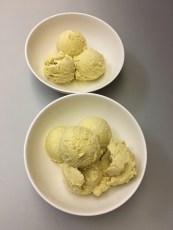 6 tablespoons pistachio ready for the freezer guess which bowl is mine
 bbfbooksbeautyfood