THE BOOK:
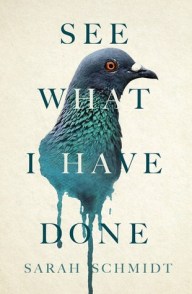 There’s something about the Lizzie Borden story that is intriguing in its gruesomeness. This book confirms that I just don’t know who killed Andrew and Abby Borden. Lizzie of course, seems the likely candidate, and behaves strangely enough, a sort of child-woman, as depicted in the book. If the book can be believed, there was a reason why everyone around her tried to shield and protect Lizzie, which is why Emma, her older sister has just as much motive, if not more, to kill her father and stepmother. Lizzie always got what she wanted, including a grand tour trip to Europe, that Emma desperately wanted to do herself, but her father insisted on sending only Lizzie. When Abby first joined the Borden family after Lizzie and Emma’s mother died, she indulged Lizzie, by giving her extra sweets the knowledge of which she and Lizzie kept from her father, who didn’t approve of such indulgences. Emma knew about this, and distanced herself emotionally from Abby, while Lizzie called Abby “Mother” early on. I’m not sure at what point she began calling her stepmother Mrs. Borden, an obvious move to distance herself. The most sympathetic character is Bridget Sullivan, the maid. Just a girl when she left Ireland, she had little comfort in “golden” America. She was hard-working and discreet, doing her job while trying not to judge her employer and his family, in spite of being miserablein their odd little household. I’m assuming that the character Benjamin is fictional, because I haven’t found anything about him specifically, just that there had been a strange man around in the days before the murders. This was an interesting take on the Borden affair, and will perhaps draw more visitors to the bed and breakfast in Fall River that used to be the Borden homestead.
THE BEAUTY: Bridget Sullivan’s family. What a loving bunch, and her neighbors, too. Back in Ireland, when Bridget grew tired of being groped by yet another grubby estate master, she was dismissed without a recommendation, because she stood her ground against him. She was running out of options, this last position was her third so she made the decision to move to America. She invited all her family and neighbors to her “American wake.” And what a wake it was! Food and mulled wine, song and dance, fiddle and drum, flute and cruit. In spite of the expense, Bridget’s father arranged for a photographer to record the event. While they stood for him, trying not to move, Nanna said, “I’ll die before this photograph is taken,” causing everyone to laugh and the photographer to stamp his foot in frustration and had to take the photograph again. Bridget kept that photograph in her room as a poignant reminder of what she’d left behind – community. As to the wake part, after partying for hours, the keening started. Bridget lay on the sofa as each of the guests approached to say goodbye and that they hoped to see her again. Beautiful, and sad.
THE FOOD: I think part of the Borden family’s problem was mutton. They ate mutton stew for breakfast, lunch and dinner. The pot sat on the stove all day long in the hot summer! I think I might be moved to murderous thoughts, anyway, if all I had to eat was mutton stew. So my sights turned to Bridget’s farewell party in Ireland, and there I found my food: soda bread. Having just celebrated St. Patrick’s Day, my husband was not happy with any of the store-bought soda breads he tried. “Not enough caraway!”
Caraway Soda Loaf
3½ C of all-purpose flour
½ C sugar
4 tsp baking powder
½ tsp baking soda
½ tsp salt
¼ lb cold unsalted butter, cut into small cubes
1⅔ C raisins
3 tsp caraway seeds
3 large eggs, at room temperature, divided
1 C buttermilk*
*If necessary, you can substitute buttermilk with a half cup of plain yogurt mixed in with a cup of plain milk and a tablespoon of white vinegar.
Preheat oven to 400°F. Butter a 9×5 inch loaf pan. In a large bowl, whisk together the flour, sugar, baking powder, baking soda, and salt. Using your fingers or a fork, work the butter into the flour until the mixture resembles a coarse meal. Stir in the raisins and the caraway seeds.
In a medium bowl, whisk two of the eggs to combine. Whisk in the buttermilk. Pour the buttermilk mixture into the dry ingredients and stir until just combined.
The dough should be neither too wet or too dry, so if it is a little too dry to work with, add a little more buttermilk. If too wet, add a little more flour. Place the dough lonto a lightly floured work surface, pat into a loaf and put in the prepared pan. Don’t overwrok the dough. Beat the final egg to mix and brush the top of the loaf with it. Using a sharp knife, cut a ¼ inch deep lengthwise slash down the middle of the loaf leaving a 1-inch margin at either end.
Bake the soda bread in the middle of the oven until well browned and a toothpick inserted in the center comes out clean, about 1 hour. Check the loaf at 45 minutes. If the toothpick doesn’t come out clean and the crust is really brown, tent foil over it and cook another 5 to 15 minutes. Turn the loaf out onto a rack to cool. Serve warm or at room temperature.
Quick breads like this, which rely on baking soda for leavening, are generally best eaten soon after they’re baked.
I forgot to take a picture of the loaf before I froze it in slices. My husband said it was the best Irish soda bread he’s ever had, and he’s old, so he’s had a lot!

 I was so moved by this story, I hope I can find the words to explain why. There are no spoilers. The jacket clearly says what the book is about. Soon after the discovery of radium by the Curies in 1898, it became the most valuable substance on earth. It destroyed human tissue, so it was put to use battling cancerous tumors with remarkable results. It could restore vitality to the old. Very rich people drank radium water as a tonic, spending as much as $3700 (current equivalent) a glass. Entrepreneurs were scrambling to find lucrative applications of the wonder element. The radium girls were a part of the industry that provided luminescent clock faces to clock companies. The paint, called Undark, was invented in New Jersey and was a combination of radium and zinc oxide. Using very fine brushes to paint the tiny numbers on the dial, the radium girls dipped the brush into the paint, then put the brush between their lips to form a narrow, pointy tip before applying the paint to the dial. With such demand from the public for watches that could be read in the dark, and promising military contracts for luminescent airplane dials, the industry quickly boomed. This story is about corporate greed’s ability to trample on human dignity, ignore ethical and moral responsibility in order to feather the bottom line. The human casualties were legion in this book. I will focus on just one, an emblem, a standard, of what these women suffered simply because they were doing their job. Of the many luminaries in this story, Catherine Wolfe Donahue embodies the heart and soul of this tragic drama, and yet, the book is only marginally about her. All the women take center stage.
 Mrs. May is a widow, having lost Henry in the distant past. Even though she always felt like an outsider in their company, she continued her involvement with Henry’s cousins, Kitty and Molly, and recently became swept up in the drama of a hastily planned wedding for Kitty’s grandaughter, Ann. Mrs. May (Thea) describes herself as “quiet, pleasant, rather dull, but infinitely reliable.” She also thinks of herself as Mrs. May. Early on in the book, she’s constantly longing for the solitary peace of her own flat when she’s visiting Kitty or Molly. When Kitty asked her to host Steve, a member of the wedding party, she immediately said no, but then quickly came around, because she is, after all according to her own description of herself, “infinitely reliable.” We eventually learn what caused Thea to become so passionless, so unadventurous, but that didn’t stop this reader from yelling at her (in my head, of course) to take a risk, do something different, bust out of your routine, meet people – anything to lift her out of the torpor that also became my torpor reading about her life.

 The transformation that this woman underwent is astounding. Raised in a survivalist household, pretty much off the grid, the circumstances of her childhood were sometimes brutal, both in the physical environment and the way in which her parents raised their children. In addition, both of her parents were Mormons, but the type that strictly adhered to the Bible, which caused them to be outsiders, even in their own church community. Being a child, and never knowing anything different, Tara grew up sharing her parents’ beliefs. When one of her brothers left to go to college, Tara became interested in the things he was learning. He encouraged her to seek an education for herself. That was the good brother. There was another brother I seriously disliked, and couldn’t believe how easily he manipulated his parents, often to the detriment of the other siblings. So when Tara attended Brigham Young University, her first time at school at the age of seventeen, it was against her father’s wishes, although he didn’t disown her. The transition was difficult because Tara continued to maintain her fundamentalist beliefs. It was the hardest though, on her freshman roommates because Tara’s practices (or lack of practices) offensive to them. So Tara led an isolated life that first year. To say that she is brilliant is an understatement. She got into BYU on a full scholarship never having attended any school! When Tara went to Cambridge to study abroad for a semester, she read with Professor Steinberg for a month before writing an essay comparing Edmund Burke to Publius, the name under which James Madison, Alexander Hamilton and John Jay wrote The Federalist Papers. I started following Tara on Twitter so that I could ask her if she would ever consider sharing that paper with her readers. She said she doesn’t think she still has the paper! I thoroughly enjoyed this book.
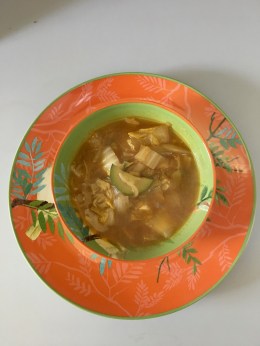
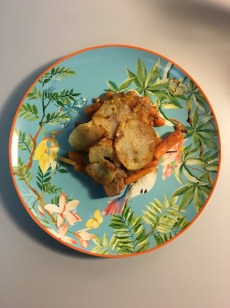 Forgot to take a picture of the casserole dish, so here’s what an individual serving looks like. Very filling and delicious.
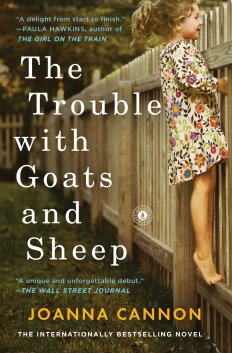 Here is another book that’s been on my TBR list for awhile. Simon, of The Readers, loved it. I was a little unnerved by his comparison to Flavia de Luce, because I didn’t enjoy the first book of that series at all, in fact, didn’t even finish. I think I was nudged into reading this now because Joanna Cannon’s new book (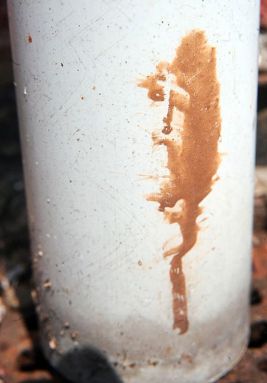
 What an endearing book. It took me awhile to warm to Eleanor, but when I did, her status in my literary hero catalogue ascended to join Don Tillman, Celine, Florence Gordon, and Veblen Amundsen-Hovda, to name just a few of my favorite literary iconoclasts. They’re all different, but share a unique view of the world that allows them to march to beat of their own singular hearts. Eleanor is a serial loner until a chance meeting with a co-worker changes her life. At it’s core, the book is about friendship, forgiveness, and finding one’s own way. Eleanor was very funny, although she didn’t usually intend to be. After assessing that the congregation in church were not enthusiastic enough in their rendition of a hymn,
 Parrot plant
 I put off reading this book because I had heard that it was filled with brutality, but I was finally drawn to it because its Goodreads rating is 4.28. It was difficult reading, and I skimmed some of the more graphic violence. It’s very similar to many of the books I’ve read in the past year about man’s inhumanity to man. The difference however is that I cared more about the characters in the other books than these characters. From what I read in the introduction by the translator, Deborah Smith. “Born and raised in Gwangju, Han Kang’s personal connection to the subject matter meant that putting this novel together was always going to be an extremely fraught and painful process. She is a writer who takes things deeply to heart, and was anxious that the translation maintain the moral ambivalence of the original, and avoid sensationalizing the sorrow and shame that her hometown was made to bear.” I’m trying not to feel shallow in my reaction to the book, but for me, it’s the emotional attachment to the characters that makes all of the historical horror urgent and intolerable, and meaningful.
 This is my first Ishiguro. I don’t know why it has taken me so long to start. Recently I googled something like ‘which Ishiguro should I begin with?’ so when this title came up, I immediately put it on hold at the library. I also read that I shouldn’t read any reviews, or even the blurbs on the book itself, to go into it completely blind about its content. I’m so glad I did that. It was interesting trying to connect the dots without any hint of where the narrative was headed. I might try that more often with other books. In the end, this wasn’t what I expected from this author, but I wasn’t disappointed, just surprised. The writing was understated, so much so that I really didn’t pay attention to it, but it was very easy to read. Having finished reading it four days ago, I find that the details haven’t dimmed at all in my memory. I’m still very much connected to Kathy and Tommy and Ruth and their story. The central theme that impresses me now is what does it mean to be human? Ironically, I had just finished reading Han Kang’s
 bbfbooksbeautyfood