THE BOOK:
 Ann Kingman recommended this one on a podcast, not her own, of course, she was a guest on Episode 15 of Book Cougars. She said it was like nothing she’d ever read before. I was pretty sure I was going to love it, from Ann’s brief summary, and I was not disappointed. It actually did remind me of another book I loved, about a deteriorating marriage, Jenny Offill’s Dept. of Speculation. The two books are similar in tone and humor, but very different in structure. I marvel at Wang’s story arc, because it’s so not linear, and consists of somewhat random thoughts strung together in a way that makes perfect sense and renders the characters fully dimensional, real and engaging. Wang explores the dysfunction of her family frankly and gently, never descending into whining about all that her parents got wrong in raising her. Her wry humor lightens a story that could otherwise be maudlin, but somehow never is. The ending was gasp-worthy for me, in a small way. I wasn’t expecting it, and it took me a while to process, but what a satisfying way to tie things up!
The unnamed narrator is a PhD candidate in Chemistry at Harvard. She has reached the point in her research where she needs that spark of inspiration that leads to the fundamental truth of her work. When it doesn’t come, and she begins lying to her parents about it, things become strained with her significant other, too. Eric’s story is the reverse of hers, having completed his degree with little stress. When Eric secures a teaching job at the University of his choice in Ohio, the narrator has to decide whether or not she will accompany him there. At this juncture in the story, the narrator is only able to express her true feelings to Eric when he is asleep. “Please stop just for a little while and let me catch up, she whispers,” in a heartbreaking nocturnal soliloquy. Ultimately this is a story of a young woman’s quest to find herself, her passion, and her self worth. I loved her, the way she viewed the world, and the way she expressed herself: a brilliant, quirky, witty woman. This excerpt is a vignette into the workings of the narrator: “But it is the Chinese way to not explain any of that, to keep your deepest feelings inside and then build a wall that can be seen from the moon.”
Since I have been commenting recently on book covers, I’ll continue in that vein by saying that while I love this one, it would have worked better for me if the atom’s orbit had been at the figure’s heart on the graphic of the woman, because the resolution to the narrator’s problem came not from the knowledge in her head, but from listening to her heart.
THE BEAUTY:
There’s a lot of beauty in this book; the writing, Eric’s devotion to the narrator, passion about chemistry or teaching. But the beautiful and endearing thing in the story is the dog. When Eric and the narrator first moved in together and talked about getting a dog, there were so many questions; what kind, big dog, small dog? The narrator did not have a preference. “How about just adorable?” so one day Eric brought home a 45 pound goldendoodle. A dog who loves people, but is afraid of everything else: the hairdryer, an empty box, the fan. If he was never groomed his hair would continue to grow and he’d look like a blond bear. Adorable!

THE FOOD:
Spicy burrito! Eric’s favorite food. Another thing Eric got right in my humble opinion, as Mexican is among my all time favorite foods.
Spicy Bean and Cheese Burrito
1 T vegetable oil
½ C yellow onions, diced
3 cloves garlic, finely chopped
2 T pickled jalapeno, drained and chopped
½ tsp cumin
½ tsp chili powder
2 15 oz cans pinto beans, rinsed
¾ C Mexican beer
1 14.5 oz can diced tomatoes, rinsed
2 C corn kernels, rinsed and drained
1 tsp salt
4 large flour tortillas
1½ C shredded Monterey Jack jalapeno cheese
sour cream (optional garnish)
guacamole (optional garnish)
Salsa (optional garnish)
In a 12” saucepan, saute onion in oil for about 5 minutes until soft, not brown. Add the garlic and cook until golden, about a minute. Add jalapenos, cumin and chili powder and stir to combine. Add 1 can of drained pintos and cook, mashing the mixture with a potato masher until most of the beans are mashed. Add the second can of pintos, and the beer and continue to cook until thickened, mashing more beans, but leaving some whole beans in the mix, about 10 minutes. Stir in the corn and tomatoes, stirring until heated through, about 5 minutes. Set aside.
Warm the burritos in a non-stick skillet, about 30 seconds a side. Lay the tortillas on a work surface. Sprinkle the cheese in the center and spoon a heaping ¼ cup of bean mixture on top. Places several rounds of jalapeno on top of bean mixture, to taste. Fold the tortilla burrito-style. Heat the nonstick skillet over medium-high heat. Place the burritos folded side down in the skillet and cook until browned, about 1 minute on each side. Serve with preferred garnishes.
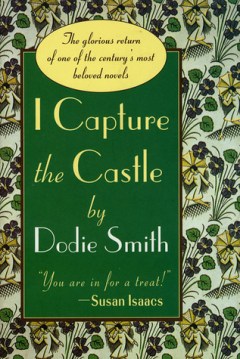

 This Newbury Honor Book is the third book in my recent reading that deals with foster children/orphans, or underprotected young adults on the fringes of social services. (Preceded by
 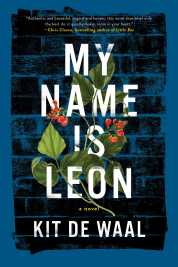 This has been on my list of books to read, although I’m not sure where the recommendation came from. What a heartbreaking story about Leon, a 9 year-old boy in foster care in Britain in the early 1980’s. Leon is a treasure of a kid. I liked him so much, I wanted to adopt him myself! There is a backdrop of racial tension between blacks and whites that finally erupts into riots in several cities, including London, and is an important part of the story. Leon loves his baby brother, and provided most of Jake’s care when he was an infant, because his mother, Carol, is frequently unable to take care of even herself. When Jake, a blonde, blue-eyed white child was adopted, Leon felt betrayed by all of the adults in his life who wouldn’t let him visit Jake. Leon’s foster carer, Maureen, is a wise and good woman, but also absent through most of the book due to a debilitating illness that kept her in the hospital for an extended period of time. Ultimately, however, this book is about the meaning of family- the one you make, not the one you were born with, necessarily. All it took here to make one, was to assemble multiple people who love each other and are committed to one another during the good times and the bad. Families don’t necessarily look like what I grew up with in the 1950’s, and that’s great. The story stayed with me long after finishing the book.
 I waited a long time for this book, and wanted to love it because of a glowing review by a blogger I follow. I plodded, rather than flew, through the book. Still, there was much to love, and I find myself thinking about the characters long after finishing the book. Set in Victorian England, there are distinct Gothic overtones to the story, that enhance the setting: London and Colchester. In the city, Charles Ambrose, a wealthy aristocrat and friend of the main character, Cora, expresses compassion for the poor of Bethnal Green who were forced to live in sub-human conditions: ” Even animals in the zoo should have their cages cleaned,” he says nobly. Before you get all judgy, remember that this is the England of Charles Dickens, and disdain for the poor was based on the upper class belief that their squalor was due to a moral deficit, not economic circumstances that left them with few resources to compete for a chance at a better life. The other location, Colchester, is the oldest recorded town in England, having been referenced by Pliny the Elder in 77 BCE. Wow! The 500 year-old George Hotel, where the Ambroses stayed when they visited, has Roman cellars, and is still in operation. In spite of its history, when Cora left London for Colchester after her husband died, her friend, Katherine Ambrose chided her, “If you wanted the sea, you could have used our house in Kent: here it’s little but mud and marsh for miles and the sight of it would depress a clown.” I love these people.
 bbfbooksbeautyfood