The Book and The Beauty:
 Two years ago, a friend recommended a book lover’s book, The End of Your Life Book Club by Will Schwalbe. When I finished reading this one today, I looked up my comments on Goodreads for the previous one, and found that both provoked the same response: commenting on how my mother and I were finally able to connect through books during the last summer of her life. There will be another post in the not too distant future about this, but I mention it here to highlight how reading and books lately, bring me back to thoughts of my mother.
This will be tough post to keep short, because there is so much in here to love. In a departure from the usual format, I’ve combined “The Book” and “The Beauty” because a discussion of the book is the beauty of it. What follows are examples of the book recommendations, poetry, philosophy and wisdom that made this book such a delight to read and record.
While there were eight all together that I wrote down, the first book I added to my list of recommendations was David Copperfield by Charles Dickens.The name David is an important one in Will’s life, as his husband, first best friend, person he wrote a book with about email, and college friend all share the name. When Will included Dickens’ quote, “Of all my books, I like this the best,” I knew I had to read it. The other book I mention here had been recommended to me by a guy we met at the bar of our favorite Chinese restaurant. Somehow I manage to get in a question about reading and books no matter where I am, and the Mai Tai emboldened me. The guy raved about a middle grade fiction book called Wonder by R.J. Palacio, claiming it to be one of the best books he ever read. When Will included it in a chapter, called “Choosing Kindness,” I moved it to the top of my list.
On to poetry. Will’s college friend David wrote his thesis on John Ruskin, a nineteenth-century artist and critic, attempting to explain how Ruskin’s views of nature changed the way we view nature. In researching his poetry, this is the one that moved me, capturing the fleeting nature of life and love.
The Last Smile
She sat beside me yesterday
With lip, and eye, so blandly smiling,
So full of soul, of life, of light,
So sweetly my lorn heart beguiling
That she had almost made me gay
Had almost charmed the thought away
(Which, like the poisoned desert wind,
Came sick and heavy o’er my mind)
That memory soon mine all would be,
And she would smile no more for me.
The following poem in the book Death Be Not Proud by John Gunther, was penned by his son, Johnny, and was included in a chapter on prayer.
Unbeliever’s Prayer
Almighty God
forgive me for my agnosticism;
For I shall try to keep it gentle, not cynical,
nor a bad influence
And O!
if Thou art truly in the heavens,
accept my gratitude
for all Thy gifts,
and I shall try
to fight the good fight. Amen
In the chapter called “Searching,” where Will talks about Stuart’s quest to find Margalo in the book Stuart Little, E.B White came under fire for what many considered an ambiguous ending. He reasoned that he left Stuart in the midst of his quest to indicate that questing is more important than finding, and a journey is more important than the mere arrival at a destination. The philosophy of the journey was first brought to my attention years ago by my philosopher-husband who introduced me the notion of “it’s about the journey” with C.P. Kavafy’s poem “Ithaka,” from which the following lines come:
“Keep Ithaka always in your mind.
Arriving there is what you are destined for.
But do not hurry the journey at all.”
In a chapter titled “Slowing Down,” Will tells of finding the book The Importance of Living by Lin Yutang through his teenage obsession with writers of the 1930’s. (Weren’t we all obsessed, although perhaps not with writers of the 30’s?) The book was a radical rejection of the philosophy of ambition that is so much a part of the culture not just of China where Lin grew up, but of France and Germany where he worked and studied, and, of course, the US, where he attended college, briefly. He wanted to give people a framework for enjoying life, summarized by “If you can spend a perfectly useless afternoon in a perfectly useless manner, you have learned how to live.”
In Wonder, Mr. Tushman, the principal, sums up the most important lesson of the year in his commencement address: Choose kindness. And he explains it to the students referencing J.M. Barrie’s book, The Little White Bird. “Shall we make a new rule of life…always try to be a little kinder than is necessary.” He goes on to say, “Why I love that line, that concept, is that it reminds me that we carry with us, as human beings, not just the capacity to be kind, but the very choice of kindness.” I wholeheartedly feel that “Choose Kindness” should be emblazoned on every forehead, so that we humans can make that choice with every interaction. The other bit of wisdom comes from the chapter called “A Final Word,” and the words are Will Scwalbe’s. “Books remain one of the strongest bulwarks we have against tyranny- but only as long as people are free to read all different kinds of books, and only as long as they actually do so…Reading isn’t just a strike against narrowness, mind control and domination: It’s one of the world’s great joys.”
The Food:
Naturally the food has come from a chapter called “Nourishing.” Laurie Colwin was a New York writer, food lover, cookbook author and entertainment guru who has been described as “not Martha Stewart.” In her book, Home Cooking: A Writer in the Kitchen, she writes about nursery food, a specific category of home cooking that evokes the wonderful, mushy, fork-only meals of childhood. She writes about being “filled with gratitude after a friend made her a shepherd’s pie after the death of her father. It was just what she didn’t know she wanted.”
In an effort to make a delicious, healthy meal, the recipe here is a composite of many that speaks to my concerns about good eating. There isn’t a lot of beef in my diet, so when I do serve it, I want it to be lean. Also, I am wary of supermarket ground beef, and prefer to grind my own using my Kitchen Aid stand mixer with the grinder attachment. Finally, this recipe is an invitation to overeat, so instead of putting the mixture into an 11 x 7 inch glass baking dish, I portioned it into 6 aluminum tart tins, meaning that each serving contains about 4 ounces of lean beef. We ate one each the day I made it, and I froze the other 4 for future snowy day meals.
Shepherd’s Pie
For the potatoes:
2 lbs russets, peeled, cut into 1” chunks ¾ tsp Kosher salt
½ C milk or half and half ¼ tsp freshly ground black pepper
3 T unsalted butter 1 large egg yolk
For the meat filling:
2 T canola oil 2 T all-purpose flour
1 C chopped onion 1 T tomato paste
2 carrot, peeled, diced small 1¼ C beef broth
2 cloves garlic, minced 2 tsp Worcestershire Sauce
1½ lbs ground beef* sprig of thyme
1 tsp Kosher salt bay leaf
½ tsp freshly ground black pepper ½ C fresh or frozen peas
½ C frozen corn
*I ground my own beef using 1½ lbs. beef loin choice sirloin tips (90% lean). Cut meat into 1 inch cubes, place on baking sheet in a single layer and freeze for 20-30 minutes. Using the small hole attachment for a Kitchen Aid stand mixer, run meat through grinder. To counteract the dryness of the lean meat, toss it with 2 T water, ½ tsp baking soda, 1 tsp salt, and ¼ tsp pepper, and let rest in a bowl for 20 minutes while you prepare the potatoes and filling.
Put the peeled, chopped potatoes in a saucepan and cover with cold water. Over high heat, covered, bring it to a boil. When boiling, uncover and decrease the heat to cook at a simmer until potatoes are tender and easily pierced with a fork, 10-15 minutes. Drain the potatoes, return to the saucepan and mash, add milk ad butter, salt and pepper and continue to mash until smooth. Stir in the yolk until well combined and set aside.
Preheat oven to 400º
While the potatoes are cooking, place the oil in a 12 inch saute pan set over medium high heat. Add the onions and carrots when the oil starts to shimmer. Saute for 3-4 minutes until the veggies start to sweat and take on color. Add garlic, stir to combine. Add ground meat, salt and pepper and cook until browned and cooked through, 3-5 minutes. Sprinkle the mixture with 2 T flour, toss to coat, and cook for an additional minute. Add the tomato paste, beef broth, Worcestershire Sauce, thyme sprig and bay leaf and stir to combine. Bring to a boil, then reduce the heat to low. cover and simmer slowly 10-12 minutes until the sauce thickens. Remove and discard the thyme and the bay leaf. Add corn and peas to the mixture. Spread combined mixture evenly in an 11 x 7 inch glass baking dish, or distribute evenly among 6 aluminum individual tart pans. Top with mashed potatoes making sure to carefully seal the edges so the mix doesn’t bubble over in the oven. Smooth with a rubber spatula. Place on a parchment-lined baking sheet, place in the middle of the oven and bake for 25-30 minutes or until the potatoes just begin to brown. Remove to a cooling rack to rest for 5 minutes before serving.
If freezing for future use, cool down to room temperature, then place the filled aluminum tins on a baking sheet and put in the freezer for at least 4 hours or overnight. Bag, label and store. To cook frozen shepherd’s pie, leave in the refrigerator overnight to thaw. Next day, preheat oven to 400º place individual pies on a parchment lined baking sheet and cook in the middle of the oven for 25-30 minutes until cooked through. Allow to set on a rack for 5 minutes before serving.

 I loved this book. There is an engaging plot and deeply developed, multi-layered characters. The setting is so richly drawn that it looms as another character in the story. But it is the writing – the writing that makes my heart respond with a flutter, an ache, a longing? I’m not sure how to describe it, and I’m also not sure if an excerpt, taken out of context will do the writing justice, so I’d better select carefully.
 This collection of essays had me laughing out loud in places both public and private. My favorite one, called “Clinton for President,” contains the phrase “…at which point she assumed I had a ‘special friend’ over,” which, for reasons I can’t go into without spoiling the story, had me hooting like a hyena. In sharing stories about his family and growing up in Port Jefferson Station, New York, the child behind the man is explicated, and who he is as a human being is revealed, sometimes hysterically. I became retroactively envious of Lisa, a high school friend who helped Clinton lay a guilt trip on a fetal pig, and Meredith, the Wendy’s cashier who withheld revelation of a crush from Clinton (because he’s a guy), but not Lisa. There are a few words that will never be the same for me, due to Clinton’s unique usage of them. They are, in no particular order: leprechaun, Kamikaze, prolapsed anus and punchbowl. I loved his idea of mandatory restaurant work for all Americans, like military service, only more random. This system was not designed to level the economic playing field, but to ensure that every citizen over the age of twenty-one understands what jerks people become over their pork chop in a restaurant. When you’re drafted, which can come at any point in your life, you report to the Bureau of Food and Beverage Service where you are assigned to a restaurant within a fifteen mile radius of your home, for two years of service. Finally, I cannot end this review without acknowledging one of the most truly profound and profane commencement addresses I have ever heard. Genius.
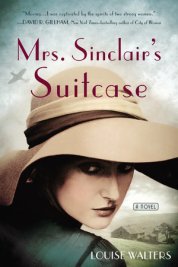 Another WWII tale, this one was set in Lincolnshire, England, about Polish fighter pilots- a story I hadn’t heard before. The narrative is told from two perspectives: Dorothy, during the war, and later, Roberta, her granddaughter. We first meet Mrs. Albert Sinclair, Dorothy, who is estranged from her mother because of whom she met at her her aunt’s funeral and subsequently married. Dorothy remains in the cottage they shared after Albert took leave of her, taking care of a couple of girls from the Women’s Land Army, who have come to take over farming in the absence of all the men who were called away to fight in the war. Roberta works in a bookshop where she collects the things she finds between the pages of the used books they sell- the notes and pictures, letters and postcards. She carefully records the name of the book where the item was found, how much it sold for and the shelf on which it was filed. A book about a bookstore! What’s not to love? One day, Roberta’s father brought in a suitcase full of books that belonged to his mother, Dorothea, who Roberta calls “Babunia,” or grandmother in Polish. John had been gradually sorting through his mother’s things after she was put into a care home well into her hundreds. Roberta finds letters among these things that lead her to believe that her grandmother had some secrets. I figured out the main secret from the very first letter Roberta unearthed, but did not know how the details would eventually come together. So in addition to estrangement from family members, there are a couple of love stories in this debut novel.
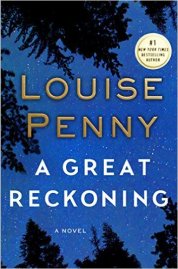 What a delightful time I spent with this, my second in the Chief Inspector Armand Gamache series. This is also the first book I have completed in 2017, although I had two others going simultaneously: a book of short stories and a nonfiction. This story completely captured me from the first paragraph. Penny initially gives the reader an intimate peek of Gamache at work before we know what that work is, and how he came to be doing it. I’d love to know how the author constructed this plot, because I suspect that a graphic of it might look like a spiral, or a mobius strip, or DNA curling its way around the characters, with connections the reader only understands at the end. I’m slowly getting to know Armand. He is a poet-quoting philosopher and historian, regularly including Machiavelli and Marcus Aurelius in his teaching and conversation. He is a devoted family man, husband to Reine-Marie, father to Daniel and Annie, grandfather to Honore. He is an ethical law enforcement investigator who genuinely, not only wants to make the world a better place, but believes he has the power to exact change. There’s so much wisdom in this book. A sampling:
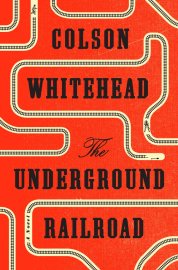 A book’s appearance on an awards list has been a pretty good indicator in the past of my inability to read it. I knew that this book was selected for Oprah’s Book Club- not a deal-breaker for me. Then it was longlisted for the National Book Award and I got nervous. It was starting to sound like something I would not be able to read my way through. Happily, I was wrong. I loved it. I began googling on the second page, starting with Ouidah, which is currently Benin, formerly Glewe, and center of the Vodun religion, which is more familiarly known as voodoo. Any time a book sends me researching ideas or places in the real world, I’m in my school-mode heaven. I love to learn, even if my aging brain at this juncture allows me to retain only a small portion of what I unearth.
 bbfbooksbeautyfood